What You Think You Become

How many times have you become aware of the expression “You become what you think” or variants on the same concept? Your thoughts are more than simply thoughts, they are what guide you through life and define you. They shape your perspective of the world and those around us. If you believe you can be successful, typically, you will achieve some form of success. However, if you believe you will fail, then more often than not you will face challenges and not succeed. This does not imply that you are prophetic, it just means that you generally believe and act out what rattles around inside your head.

Your mind is a powerful tool when used correctly, but it can also be your own worst enemy. You may not know it, but for most people, your mind can play tricks on you. If you think you cannot do something, at that point you have set yourself up for failure. Before you have even begun you are questioning whether you will be successful, it is a formula for calamity.

Buddha stated, “The mind is everything. What you think, you become“. As you probably have picked up from the above paragraphs, there is an honest truth in this statement. It then follows that if you can control your mind, you can help to direct and guide the direction of your life. We live what we think about constantly. These thoughts might be intangible, however, their power lies in the way they affect and influence us. For every thought or action, there is a reaction or effect. This correlates to the observations made by Newton when he detailed his third law of motion. Realise that your thoughts and reactions all have effects and consequences. There is always an effect even if you do not witness the result. Your thoughts and reactions in life can result in an accumulation of emotionally charged energies within you. These energies can have damaging or detrimental effects on your body, sometimes bringing about illness.

We have the capacity to choose how we feel and to dictate how we will live our lives. That is why our thoughts are so significant, due to the fact that they determine virtually every element of our lives. You can either be shackled by your thoughts or set free by them. If you want to transform your thought process and improve your quality of life – you must take action. So begin to take control of your thinking and reactions to make sure that you only build beneficial energies of thought.
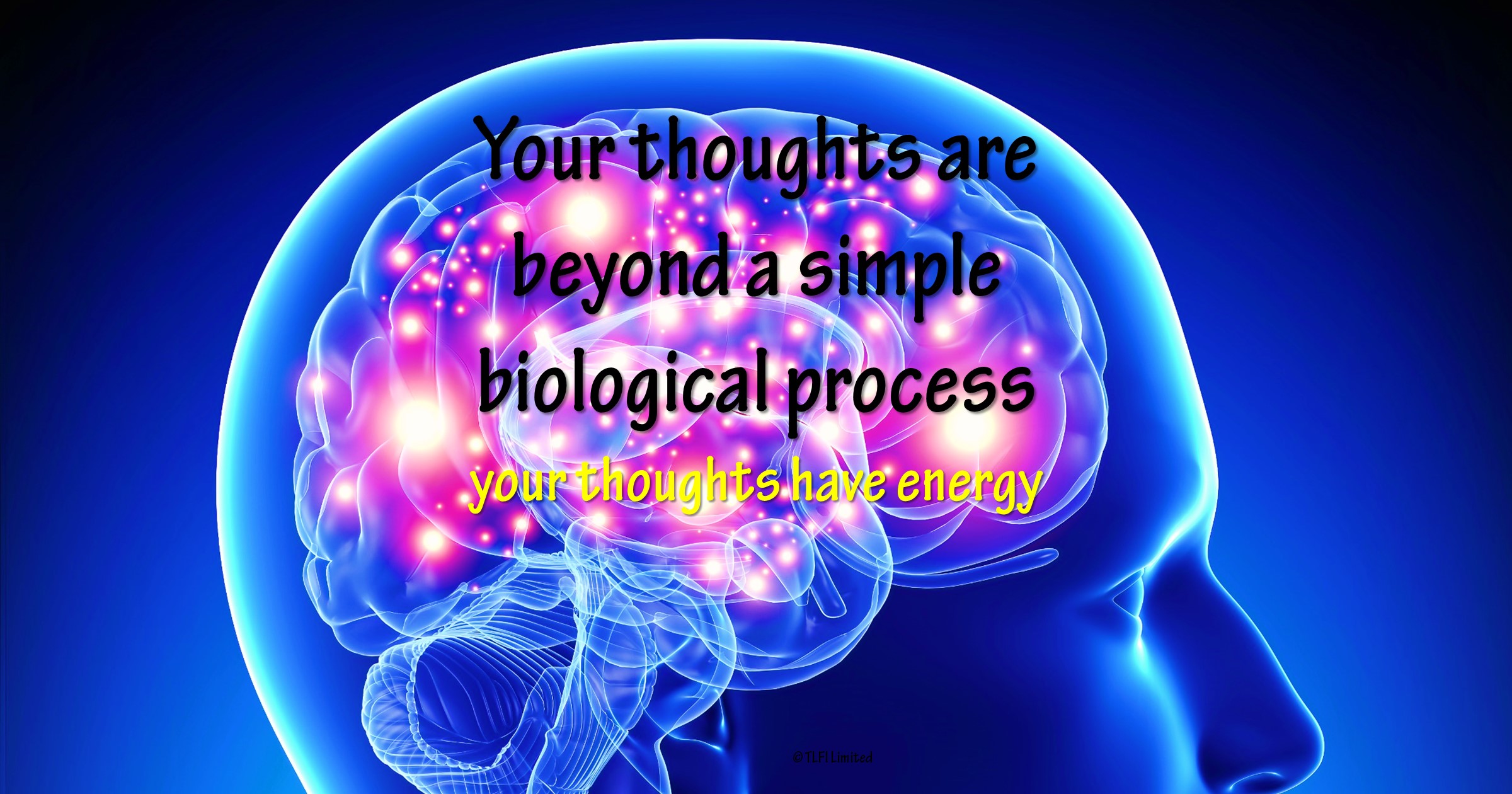
Your Thoughts have Energy

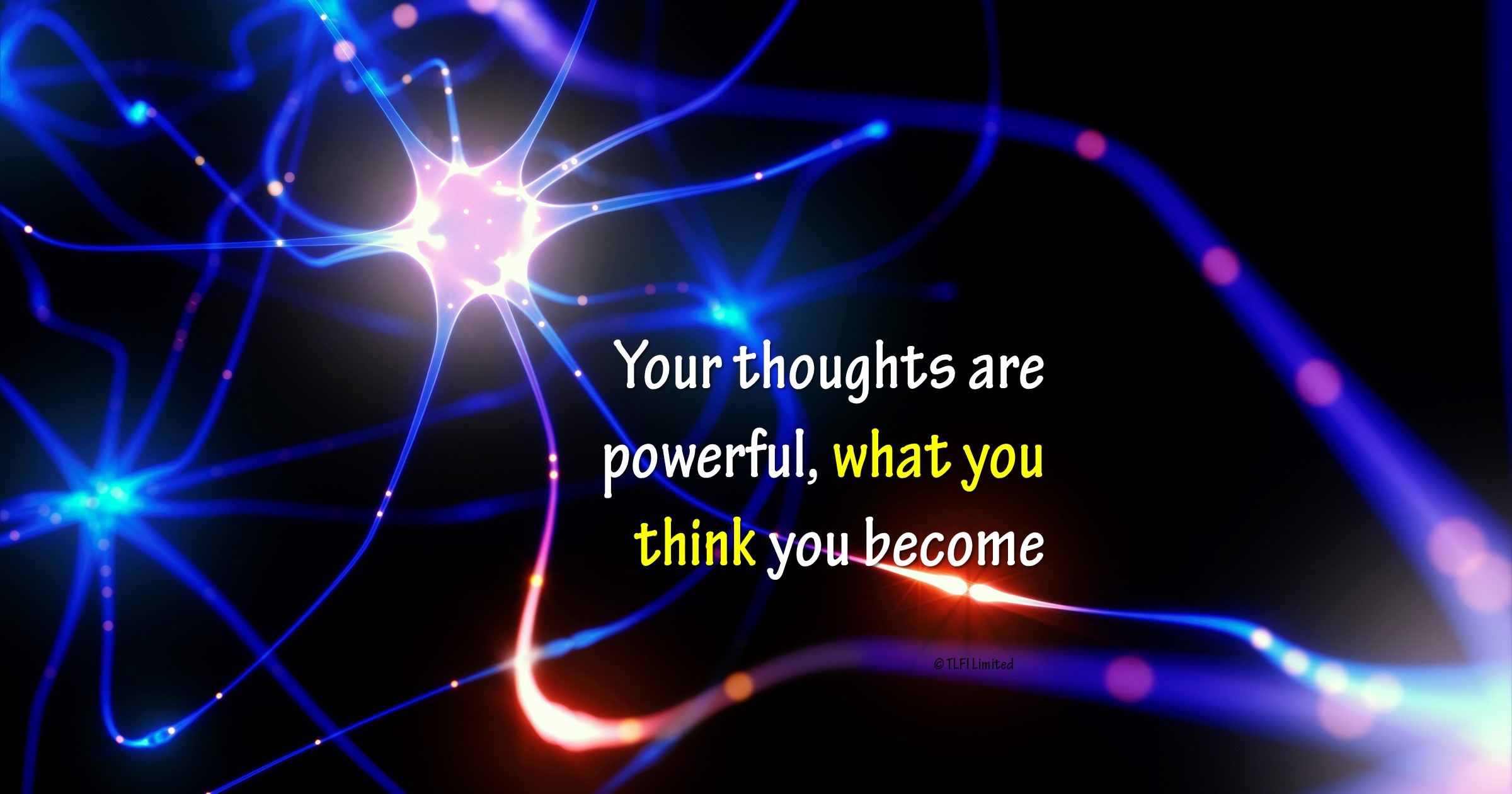
Thought is a rudimentary human function, and something everyone does daily. The human brain is made up of about one hundred billion neurones, which are interconnected by trillions of connections, called synapses. Each of these connections could be relaying anywhere between one and a thousand transmissions per second powering the basic biological engine of thought. That being said, are your thoughts beyond this biological process within your brain?

It is necessary to consider that the human brain is just part of an intricate system which entails the complete mental form. Thoughts arise not only as electrochemical connections of the brain but are present as electromagnetic impulses. Some cognitive researchers have started to perceive that thought is not confined to the brain, but simultaneously occurs in the brain and the body. It is this electromagnetic nature of thought, which enables it to spread through the brain, the body and our surroundings.

As thoughts are generated via an electromagnetic impulse, thoughts are in their very nature, formed of energy. Let us consider for a moment, that thought is created, and by so doing, you have actually placed within the thought your very own energy. On a fundamental level, you can regard the energy of thought as the biochemical energy which is derived from the metabolism of sugars within the neurones and glial cells of the physical brain. You should additionally regard the energy of thought as being the magnetic energies which flow through the mental form to enliven the thoughts generated in your physical brain. You have created thought with the combined energy within the brain and mental mind, and then because every little thing in the known cosmos is constituted from energy, then it stands to reason, thoughts are in themselves energies.

Meditating with a Noisy Mind

The utmost goal for anyone undertaking meditation is to realise a tranquillity of the mind. However, the majority of us have noisy minds and attaining this preeminent state of a quietness of mind is seriously difficult to achieve. Yet having a noisy mind, does not mean that you cannot meditate, it merely means that you need to take a different approach in which you discover how to become the master of your mind.

If you have a noisy mind, trying to achieve silence of your mind may be tough to achieve. Frequently your very own efforts to quieten the mind will restock your mind with the noise of thoughts comparable to those which you are attempting to remove. Your mind might seemingly inject thoughts such as “I can’t stop thinking” or “I do not know if I am doing this right” feeding the increasing levels of noise as your mind tries to persevere control. This can reveal just how much attention most of us pay to our mind, listening to every single thought which it raises every day.

While you may not have the ability to achieve a quietness of mind at the outset, it is very important that you must not give up. You just need to discover an alternative means to focus your mind. Some people find success in creating a space in between their thoughts of their noisy minds. While others can discover success by learning to become the observer of their thoughts, as if they were being played out on a movie screen. Others may find that listening to a gong or similar tone can assist by the sound becoming the focus of the mind away from the endless stream of thoughts. In all of these ways to accomplish meditation success, the key, whether apparent or not has been on achieving some focus for your mind. The distinction being, that as you come to be that master, you can learn to focus your mind, thereby banishing the noise of your thoughts to the background. So even though your mind is not quiet, you can achieve meditation with focus. Then overtime, you will find that as you repeatedly take control of your mind and focus on meditation, these other thoughts will drift further into the background, so you may attain success.

More than Enough

It has become incredibly easy to be engulfed in your anxieties, concerns, and insecurities when a great deal of today’s culture and social norms seems to be based around the perception that everyone deserves something, whatever that may be. Sure it is alright and perfectly fine and reasonable to have big ambitions or goals in life. Where many of us struggle resides in balancing our hopes & dreams with the world in which we live. Aspects of depression, stress and anxiety can creep into your life and overwhelm your thoughts and emotions; result in being bogged in a quagmire of decreased pride or self-worth, as you become stuck in a self-defeating cycle of measuring your life to someone else’s.

If you find yourself in such a state of mind, then one simple little phrase of “I am enough” can be used to transform your thoughts. Repeating this thought on a regular basis can help give you a sense that everything is okay. This allows you to instil a new found sense of happiness or inner contentment, transforming the direction of your life for the better.

Discover the Skill of Focused Thoughts

When focused with intent, your thoughts can be significantly more powerful, akin to light being concentrated by a magnifying glass. If, however, your thoughts lack focus, they may resemble light being transmitted through a prism or even being diffracted through the water. While light can be transited through a magnifying glass, a prism or a glass of water what happens to the light on the other side is very different. When the light passed through the magnifying glass, the multiple waves and particles of light are focused with greater intensity. Conversely, light transiting through the prism can be split up and separated, effectively reducing the overall intensity. Similarly, light traversing a glass of water can be distorted and scattered by the intervening components so that the light may no long bears recognisable as the original form.

These examples of light passing through various substances are comparable to your own thoughts. You can discover the skill of focusing your thoughts through the technique of Ekagrata rather than allowing your thoughts to become dispersed or scattered like the light in the previously mentioned example of the prism and glass of water.

The ability to be able to truly focus your mind is a key aspect of any practice relating to mindfulness or indeed any aspect of your life. The basic principle of Ekagrata is simply that of focusing your thoughts without concentration and maintaining that focus without allowing your mind or thoughts to drift off to other things. The same principle of focusing your thoughts is also important for those who wish to succeed in their practices of meditation or other more advanced techniques such as Cognition.

While many may talk of focusing your thoughts, it is important to comprehend that there is a subtle but important difference between focused thought (Ekagrata) and concentration. While concentration can seem similar to focusing, it often contains emotional aspects which can distort the thoughts resulting in an overall unsatisfactory result. So take the opportunity to discover how to focus your thoughts without concentration as this can help you in so many ways.

Change with IOEA

Throughout the day your conscious and unconscious minds take in all forms of information and sensory perception. Your minds not only process all of this information but also reacts to this stimuli, whether it is right, wrong, sometimes inappropriate or at other times seemingly indifferent.

The simple mantra of IOEA (Inhale, Observe your breath, Exhale, Awareness of your thoughts) applied as you breathe can help you moderate your reactions and allow you to choose how you will respond in life. As you Inhale, simply take the moment to Observe your breath. Do not try to overcomplicate things, as this simple act of Inhaling and Observing will allow you to pause any seemingly unconscious reaction. Then as you Exhale, take the moment to apply some Awareness to your thoughts and thinking. You may find for more difficult situations that you will need to repeat the cycle of IOEA a few times so that your unconscious thoughts or reactions do not see the light of day. Instead, with awareness, you may choose to respond differently rather than reacting.

Is your Mind Making your Life Hectic?

When your life seems to be rushing by and everything around you seems to be happing too fast or out of your control, make the effort to stop for a moment. At that instant in time, with the world on pause, ask yourself, is it the world that is busy and hectic, or is it my mind? You might actually discover that the fact is, that your mind is overfilling your life with innumerable and quite often unwanted and frequently groundless thoughts or other contrivances. With some of these thoughts paused, you now have the opportunity to reestablish control of your mind to make your life truly less hectic.

How the Mind Controls your Existence

Extremely few people are aware of, or comprehend, just how much we come to be totally connected with our intense thoughts and psychological responses in our lives. Being so engaged, we rarely consider that it is our mind, which generates a huge portion of the unhappiness, worry, anxiety, sorrow and even aspects of depression and ill health in our lives.

Every day and every instant in time, you can choose exactly how to react or respond to anything in your life. Via the astute application of active intelligence, you can opt to remain in control, rather than falling right into habits or sets of pre-programmed thought archetypes, which have been bolstered by the psychological reactions of your passive intellect and everyday excuses. Seize the moment to briefly stop and deliberate regarding just how your own thoughts and psychological reaction and responses are impacting your everyday thinking; after which you can choose to make an informed response through the application of your active intelligence.