Staying Awake in Meditation

It can be common for people to struggle to remain awake on occasions during meditation due to three separate factors (see later on). Regardless of the explanations for having this propensity to doze off, the key resides in applying your awareness. Becoming aware is a core competency to be acquired through meditation, so, intriguingly, being aware is the key to not zoning out during your meditation activities.

The most common reason for people having a tendency to doze off during meditation is unsurprising a result of their hectic or frantic lives. If you have had a busy day or have struggled with stress, then you might identify that you often become drowsy during your meditation. This is simply because your body begins to destress from the pressures of your life as you perform the meditation activity. If you regularly experience this, then take time out to stand or splash some water on your face before proceeding. During the afternoon, lots of people experience an energy slump which can affect them when meditating. If that is the case, then it could be more beneficial for you to practice meditation in the morning when the body is awake. It is also common that a relaxed posture can contribute to the impulse to nod off, so take the opportunity to get started with some improved posture before you start your meditation. It does not mean that you need to sit in a contorted position, just becoming more aware of your body is the key.

A much more bewildering reason why you may become sleepy during your meditation is that your mind is proactively functioning to control your life. This might sound like a dichotomy that falling asleep is because of the activity of your mind. Yet it is effectively your mind which is applying control over you, hindering your ability to successfully practice meditation. In this way you might feel as though you are not succeeding, and that you cannot meditate. When the fact is, your mind is compelling you to be this way to ensure that it can preserve control. If you continue to meditate, you can strive to take back control from your mind, nevertheless be aware that your mind is most likely to strongly resist giving up control at any cost.

The final aspect which is seldom taken into consideration is that through the process of learning to meditate, you can awaken some of the inner energy of your true self. As the energy of your Life Force flows into your body, this can initially lead to a sensation of tiredness or even phasing out. This is simply because your body and mind are not accustomed to these kinds of energy apart from the minuscule quantities which are necessary to keep the human mechanism alive. If you are experiencing zoning out, then the key once more is the application of awareness. Being aware, as mentioned previously, is a cornerstone of meditation and it is never truer than when your Life Force energies begin to come to the fore via advanced meditation. As you apply your awareness, know these energies flow through the energy pathways (meridians) of your body. This knowing, through your awareness, will assist you to maintain your focus and not zone off.

Learning to Pause for a Moment

Learning to pause for a moment is an effective way to control your reactions in a world which seems filled with conflict and triggers. Pausing for a moment is very important for your happiness and wellness.

Have you stopped to consider that you may be continually rushing through life, not pausing to notice all the wonder that exists around you? So even if you are not pausing as a means to control your reactions to what you are experiencing in life, try to pause now to savour the moment, whatever that may be.

Simple learning to pause for a moment can be a very powerful tool which not only allows you to moderate your thinking, it also allows you to connect and savour the moments in life.

What is Human Intellect and Intelligence?

Energy is the catalyst and creative force of the universe and life within it, which brings into existence atoms, particles, worlds, stars and galaxies. The human form is made of the very same substance and controlled by the same energies; yet is endowed with a mind to think, examine, reason and learn. However, few of us genuinely understand how our mind functions, let alone realise that what is generally regarded as the human mind is a construct of many different aspects. Broadly speaking, the human mind can be categorised into four main areas. First and foremost is what the majority of people consider the mind, it is your intellect or what is referred to as Buddhi in some old languages such as Sanskrit. Various other aspects of the human mind include your personality (Ahankara), your mental form or body (Manas) and the Spark of Life (Chitta) which connects to the basis of creation within you.

What is perceived as the human mind, is typically that of the brain. This is the component of intellect, the domain of thoughts and thinking, however, this is just a small part of the bigger picture. Our minds are undeniably a lot more than our intellect, as they consist of multiple interrelated parts which function as a whole. The complete intelligence of us as humans is distributed throughout our being. The knowledge and understanding of how to access or use these other components of our intelligence is rarely understood.

We unconsciously use some of these other dimensions of our mind all the time, yet few people are aware of the complex interactions and how our minds function. Consider that you do not know how to conduct your mind, your energies, your emotions or your body, and any effort to understand this could be beneficial for you to fully engage in life.

Your thoughts are energy, but they are just the beginning, as your thoughts interact with the various other facets of your minds. Through obtaining an understanding that you are far more than the intellect of your brain, you can begin to comprehend that there is a great deal more to making life happen. Take the time to pause and think with active intellect is an excellent starting point in life, and can lead you to the greatest discovery of the human minds.

I Cannot Clear My Mind

When attempting to meditate, do you have problems clearing your mind of thoughts? Often those thoughts keep on coming back, and you seem destined for failure no matter how hard you try. The good news is that this is a very common challenge encountered by anyone starting meditation. It is not a sign of failure that you are having difficulties making your mind clear, quiet or supposedly blank. Even those who have practised meditation for many years may at times have problems. The most important thing is to keep persevering, and if necessary try different approaches or techniques, until you find one which works for you.

While quietening your mind is an important goal for any meditation, realise that each of us will achieve different degrees of success. For some people attaining the ultimate goal of full quietness of mind may not be possible, but that does not mean you cannot meditate.

The first and foremost thing to realise is that your very efforts to clear or quieten the mind can often be the cause. Your mind becomes filled with the distractions of the very same ideas you are making an effort to clear. If this is the case or you have a very rowdy mind, then you should shift your efforts to achieving a small area of calmness.

The second obstacle most people face is that they try to erase or eliminate their thoughts. The ability to quell or eliminate thoughts is very difficult to achieve for most of us. So the best approach for success is instead to push your thoughts aside or to the background, thereby diminishing their presence. With time and effort, you can build the skills to be observant of your thoughts, acknowledge them if necessary and push them aside. Then as you push more of these thoughts away, you can establish a small beachhead of quietness in your mind. Be happy with this achievement, as it is an important milestone. As you practice more, you will find that you can expand the quietness outwards, pushing your thoughts farther aside and into the background.

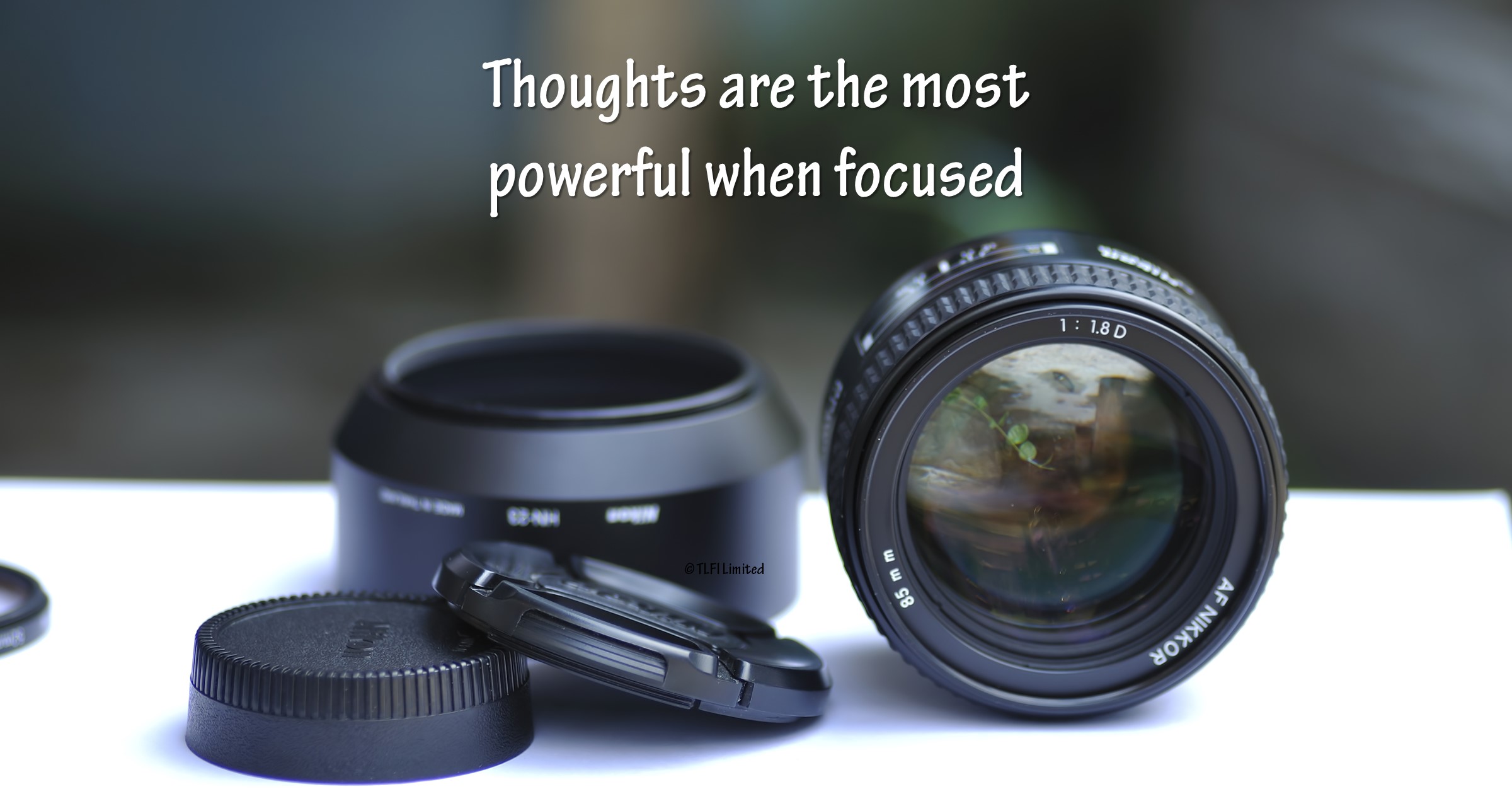
A very useful technique which can be utilised to help with meditation or even mindfulness is called Ekagrata, which simply means focused thought. Applying Ekagrata enables you to focus on one thing, such as your breath, repeating a mantra, or mindfully shifting your attention to a specific thought. As a master of your mind, you are not thinking of everything at the same time, you are being purposeful and focusing on one thing at a time. If stray thoughts enter your mind, you acknowledge them and push them aside to achieve that focus of mind which is Ekagrata. Become the master of your mind with Ekagrata, so that you may learn to clear your mind.

More than a Good Thought

There is a strong correlation between being happy and optimistic to being physically well. Typically, people who express positive thoughts and emotions are at a reduced risk of becoming ill. Feeling happy or having positive experiences is linked with better general health or more content living. So is there more to this than just positive thinking?

Yes, this is more than just thinking a good thought. Positive psychology is a branch of psychology focused on the character strengths and behaviours that allow individuals to build a life of meaning and purpose. While many other branches of psychology tend to focus on dysfunctional aspects of the human mind, positive psychology is centred on helping people become happier on many different levels. This new branch of psychology encompasses a variety of techniques that focus on developing positive thoughts, positive emotions, and developing positive experiences. You can see how this new form of psychology extends beyond thoughts alone to bring forward the complete picture of the human system of wellbeing.

Positive psychology is often confused with positive thinking, which is purely about thinking positive thoughts, rather than changing your way of thinking into a different frame of mind. Positive psychology works at a deeper level on improving our positive character traits, such as loyalty, humility and integrity. It does not discount that there are negatives that impact our lives. Instead, positive psychology aims to look at the situation to better understand human experiences and determine how to best foster positivity and good thinking. These aspects of positive thoughts are then reflected and reinforced by positive emotions and feelings. As we live in a physical world, if these positive thoughts, emotions and feelings can be bolstered by positive experiences, it creates a more powerful narrative than any of the elements individually. We can all leverage aspects of positive psychology so that we can thrive rather than just survive.

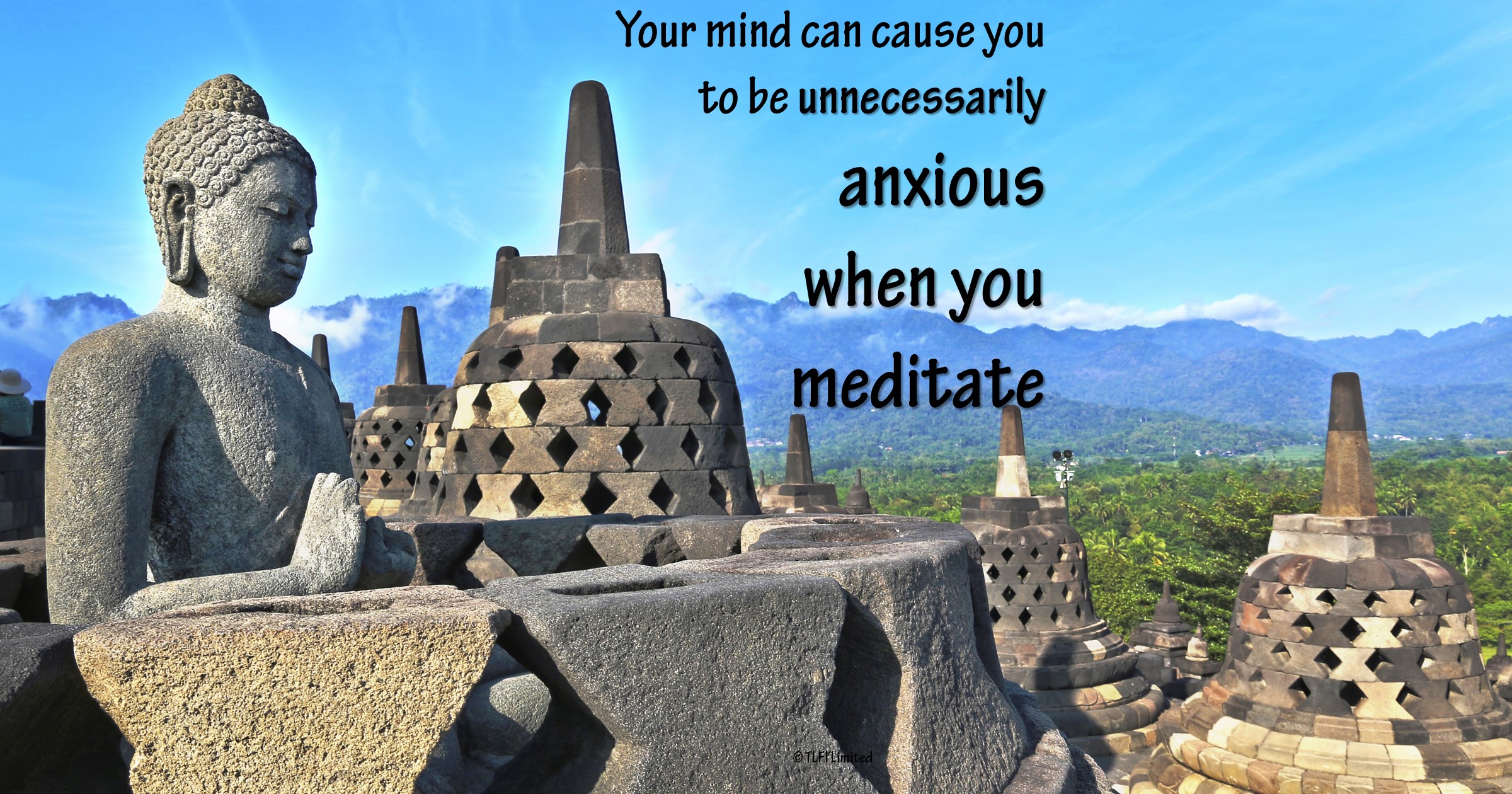
Why am I Anxious when Meditating?

A common feeling that you may experience when starting to meditate is that of being anxious or nervous. First up, do not worry, as many people experience the same feelings when they do meditation, especially when starting or if they have had a gap or lapse in doing meditation.

When you first start meditation, you may feel uncomfortably awkward or out of kilter in some undefined way. This can be especially true if you lead a busy life, or there are lots of things which typically occur around you. These feelings are completely expected and a natural sensation as your mind has been used to the normal hustle and bustle of everyday life. The change of pace when you begin meditation can trigger feelings of anxiety or nervousness to name just a few.

If you do feel uneasy when practising meditation, then be aware it is your mind which is generating these sensations. It can be common for your mind to generate a FOMO (fear of missing out) as it attempts to re-establish its control over your life and your way of thinking.

There are several different ways to address your anxiousness when meditating. One obvious, but often overlooked method is to simply tell yourself that you are not anxious and it is just in your mind. Another effective way to help you feel less anxious is to simply lower your gaze to a spot on the floor or ground before you, rather than closing your eyes. Some other breathing techniques, such as Breathe with Purpose or Life-Force Meditation can assist you to become more comfortable when you start out meditating through the use of specially structured activities.

Bringing True Focus

The capability to really focus your mind is a pivotal aspect of any kind of meditation, mindfulness and certainly many facets in your life. If we were to evaluate the populace in its entirety, it would be discovered that a very small percentage of individuals have the inherent capacity to really focus and quieten their minds without concentration. While roughly two-thirds of the population will regularly struggle to bring focus to their minds. When your thoughts lack focus, it is akin to light travelling through a prism contrasted to light going through a magnifying glass. While the light transverses both the prism and the magnifying glass, what occurs to the light on the journey is very different. The same holds true of your thoughts, where you can learn how to focus your thoughts, as opposed to letting them become scattered or dispersed. This is becoming considerably more important as our awareness or attention spans are diminishing, along with our capacity to retain relevant information as a result of the arrival of social media and contemporary InfoTech.

What approaches can be utilised to aid in bringing true focus to your minds and thoughts and not on the occasional time that you remember to practice? Most techniques which are embodied in mindfulness and meditation can assist you to focus your thoughts, but you may wonder how can this work.

One of the most effective tools to achieve focus is Ekagrata. Though the techniques of Ekagrata are typically only beneficial for a tiny percentage of individuals who have actually been determined to tame their minds and invested the hours of training.

For a lot of people, making use of sounds such as chimes or gongs can provide an external stimulus which will assist in focusing your mind. People can then focus on the sound, as opposed to the various other thoughts which float around their minds. With this focus, you can then establish calmness within, which can then provide the basis for you to discover more advanced or sophisticated aspects of meditation.

Conscious breathing and techniques similar to Breathe with Purpose; which are free, can offer an alternative effective way to help focus the mind. Such techniques are notably beneficial for applying positive affirmations. These are just a few of the numerous techniques which can be leveraged to help you. The most important aspect is your ongoing efforts to bring focus to your thoughts.

Be Aware as you Walk

Walking can be beneficial on many different levels. Walking has been used as a means for becoming calm, helping to quieten the mind and even for spiritual advancement for countless years. People are gradually starting to rediscover the diversion and basic enjoyment of walking. A walk can be included in a break at work or at any time of your choosing. If you are experiencing stress or anxiety, then taking a walk may well enable you to ease some of this mental anguish, frequently giving you an opportunity to bring a different perspective to the situation. While we can all appreciate that going for a walk in the country, or other nature spots may be the most beneficial, realise it is the walking which is the catalyst for your changed thinking. Simply taking a brief walk around the block or around the local park can have a beneficial effect on your day.

The basic act of choosing to go for a walk, allows you to have a change of surroundings. This change alone, may be sufficient for you to be more mindful as you are no longer immersed in the situation. The removal of yourself for a particular situation or location is just as important as the act of the walk itself. This is because you actively remove yourself from the emotional triggers, thoughts or energy which were at your previous location. With the proverbial change of scenery, you have the opportunity to enjoy the experience of the walk itself.

As you walk, attempt to be aware of the sensations within your body, such as the motion of your legs or arms, and be aware of your breathing. Depending on where you have gone for a walk, you may additionally take in more of the environment around you. You may become more conscious of the sounds which constantly float into your ears, the smells which fill your nostrils as you breathe, or even the temperate of the air or the feeling of the sun on your skin. All of these acts of awareness or observation of the world around or within you, can help to change the way you think if you allow it.

Often one of the biggest challenges is that when people go for a walk as a break, they bring their problems with them, rather than doing their best to leave them behind so that they can really benefit from the walk. Take some time out and go for a walk to avail yourself of the opportunity to be more mindful, take a break and refocus. You may well find your thinking will be sharper and your mind clearer after a beneficial break.