Social Stories

How often do you spend scroll through social media? The social media landscape is increasingly adorned with curated snapshots of seemingly perfect lives, picturesque vacations, impeccably decorated spaces, the latest fashion, the best accessories, as well as joyous gatherings with friends and funny videos or reels. Increasingly your views are being orchestrated by AI algorithms designed to highlight influencers and increase monetarisation for the platforms.

In light of this, as you scroll through this digital landscape or are immersed in VR, you should take a moment to consider the true social stories. Rarely do social media feeds showcase the ordinary, the routine, and the less-than-perfect moments that make up the fabric of everyday existence. Despite all the often carefully created images, if you were to peel back the layers of illusion, you would realise that regardless of their curated online persona, most people do engage in rather ordinary lives.

Awareness becomes the key to navigating the social media mirage. As you scroll through these curated glimpses into others’ lives, try to realise that what is often portrayed is increasingly likely to be a carefully orchestrated social story. Through this awareness, you can safeguard yourself against the pitfalls of comparison, envy, and feelings of inadequacy. This improved relation with the digital landscape allows for a more grounded and realistic perspective, preventing the negative impact of social media which can sometimes have adverse effects on your self-worth and lead to a myriad of other issues.

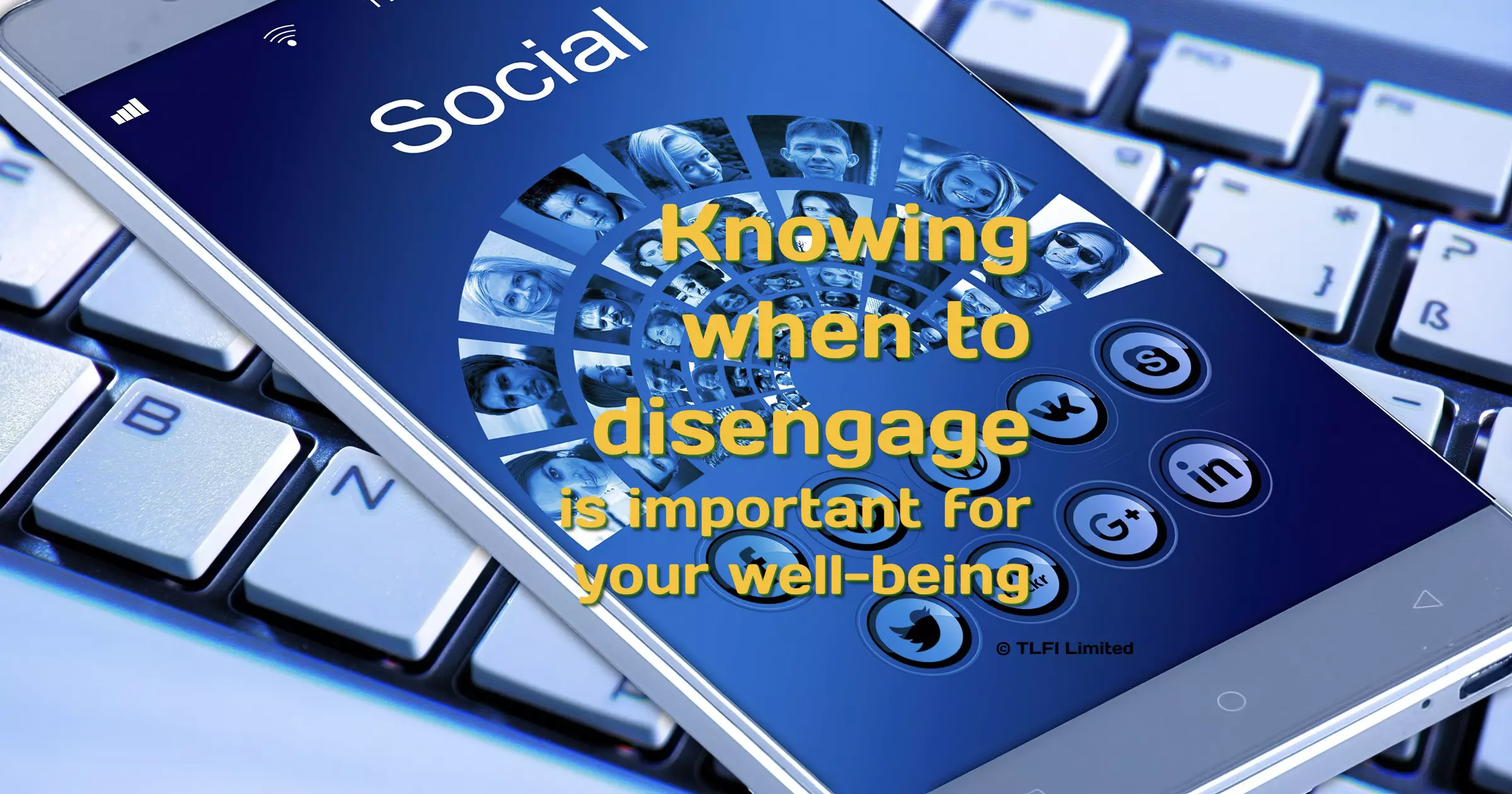
Empowerment lies in you recognising that you cannot control the content others post, but you do have a choice as to how much you are absorbed into the social stories, endless videos or regurgitated memes. Knowing when to stop, and disengage, or setting boundaries is an important aspect of your interactions in the digital landscape. The decision of how much to view and how to respond to digital content becomes a conscious choice. Setting boundaries for the digital realm, and recognising the value of real, unfiltered connections in the offline world become essential tools in maintaining a healthy relationship with social media and being able to appreciate your own unique social story.
Escaping Emotional Jail

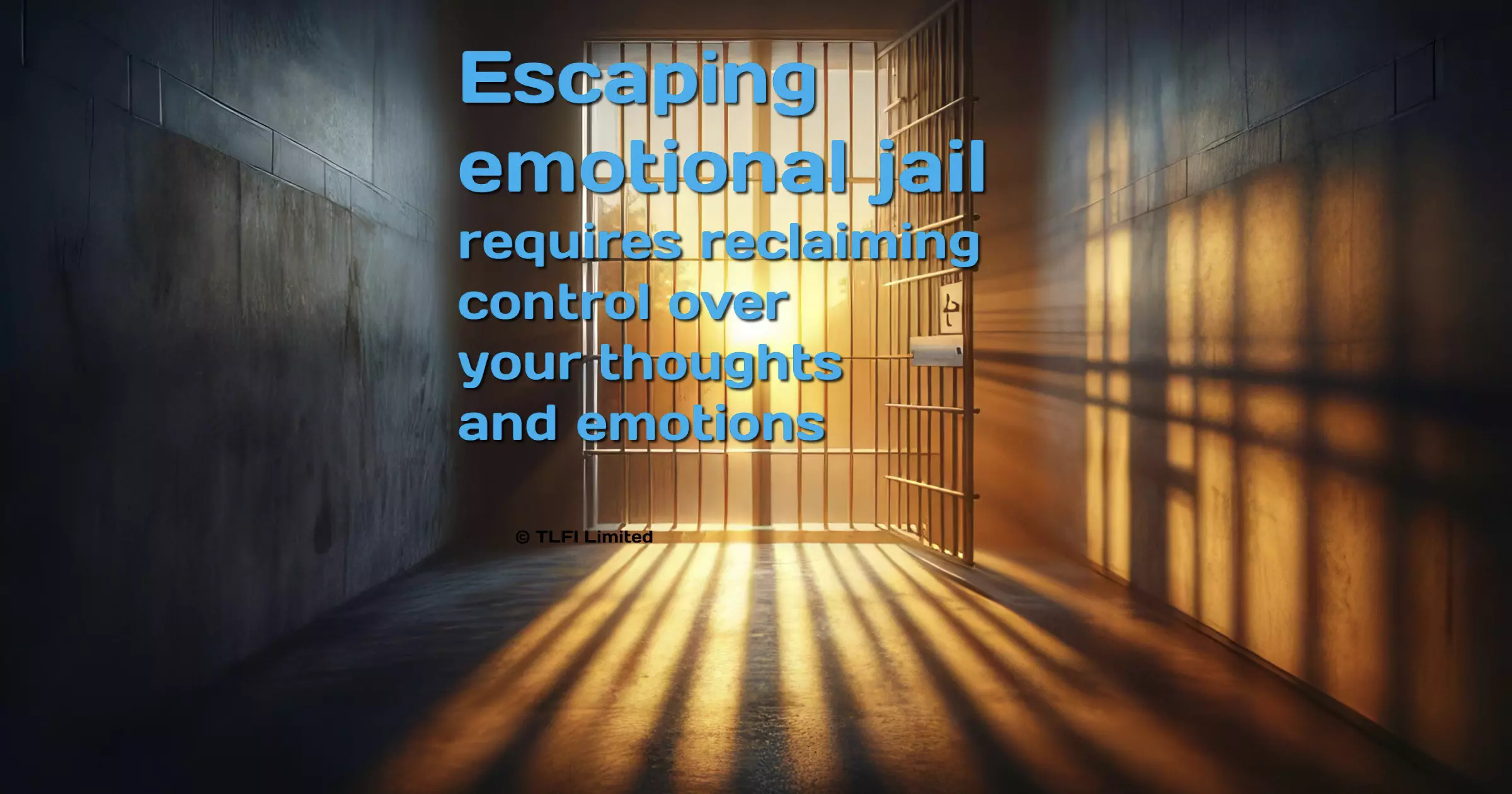
Emotional Jail is a powerful metaphor that encapsulates an entrapment which you may experience, due to the web of self-limiting thoughts and emotions manifesting when you get into a so-called emotional state. When you get deeply emotional, it becomes hard to recognise the barriers built by the passive intellect of the mind. In the throes of an emotional state, the passive intellect orchestrates a relentless parade of self-limiting thoughts and corresponding emotions, constructing an intricate tapestry of limitations and excuses. These thought patterns become the bars of your emotional jail, restricting your ability to think clearly. This metaphorical emotional prison is not only a construct of your mind, but also an energetic state that takes its toll on your mental, physical, and emotional well-being.

Escaping your emotional jail is about how you can learn transformative techniques to break the chain of emotional cause and effect. Thereby giving you an opportunity to break free from this emotional quagmire of your own construction.

The journey to escape the emotional jail is an inner odyssey, requiring commitment to mindful awareness and bringing forward cognitive mastery. As you cultivate these skills, they can help you to become aware of the thoughts and emotions which have formed the prison bars and walls. Being aware is the first step to being able to dismantle the walls of self-imposed limitations, creating an opening for renewed mental and emotional freedom. Escaping your emotional jail, requires reclaiming control over your thoughts and emotions, unlocking the potential for a more liberated, empowered, and balanced existence.

Entering into a state of cognition is an extremely useful key to unlocking your emotional jail. This is not a passive quietening of your mind, but a deliberate and focused effort to silence the cacophony of the thoughts. Cognition involves a dedicated purpose of thought, a specific conscious redirection of mental energy toward constructive, empowering, and liberating perspectives. By quietening the mind with intention, you can create a space for clarity, and the dissolution of the emotional jail’s energetic grip.

Procrastination Affects Your Happiness

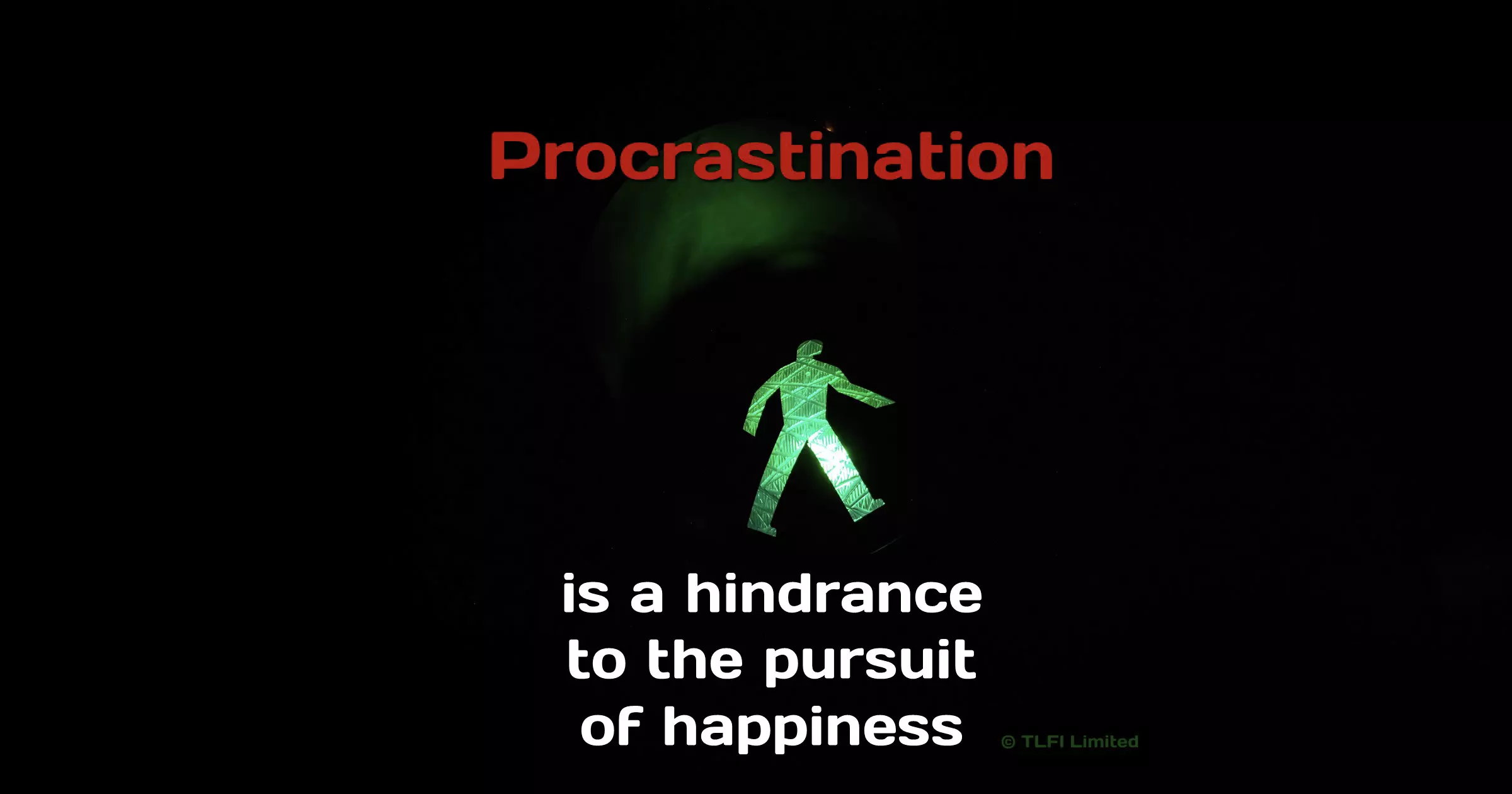
Procrastination, often dismissed as a harmless delay, conceals a significant impact on your well-being and can affect your pursuit of happiness. On the surface, procrastination, or delaying things may seem innocent. However, the crux of the matter is that procrastination, rather than just getting on with things, can often lead to a hidden accumulation of energy, which in some cases can result in increased stress.

It is not uncommon to be faced with tasks which you may deem undesirable. In these situations, the mind naturally gravitates towards avoidance. This avoidance perpetuates delays and adds to the underlying emotional causality. The looming sense of “I don’t want to do this” can very quickly build to be a burden, amplifying the stress associated with the task at hand. This thinking pattern then creates a feedback loop, which not only delays the completion of necessary responsibilities but affects your emotional well-being.

Addressing procrastination requires a proactive approach. By confronting the task head-on, you can liberate yourself from the grip of avoidance, unravelling the knots of stress that hinder your path to happiness. Tackling necessary tasks, not only frees up mental space, but also creates a sense of accomplishment. The release from procrastination allows for a redirection of energy toward more enjoyable aspects of life, fostering a positive cycle where the pursuit of happiness becomes an achievable endeavour.

Are you Awake?

Being fully awake in a metaphysical context entails a heightened awareness of the ongoing processes within your field of consciousness. It involves a mindful recognition of the ebb and flow of thoughts and emotions, empowering you to navigate your mental landscape with clarity and responsiveness.

So instead of unquestioningly succumbing to the whims of your thoughts and emotions, remain vigilant and acknowledge the current state of your mind and emotions before they reach a tipping point, or the proverbial point of no return.

By staying attuned to the nuances of your inner world, you can foster a greater sense of self-awareness and follow through with conscious choices that align with your aspirations.

Live in the Moment

Whatever the past was, it is now gone. There is nothing you can do to change anything that has gone before. Turn your attention to the here and now. It is hard to resist the allure of dwelling on what has gone before. But if you want to be successful in your life, you must turn your attention to what is happening to you right now. You might be tempted to dwell on the past because it was awful, or because it was wonderful. Either way, you have to leave it behind, because the only way to live is in the present.

If you revisit the past because of regrets, then you should realise that you can’t go back and undo what you have done. The reality is that we have all made some form of one or more decisions in the past which we later regret, but that is the past. If you hang on to guilt, you are only damaging yourself, feeding a new cycle of emotion which could lead you to a very similar situation. What you can do is learn from the past. Acknowledge the choices you made and do your best to make better choices now and in the future.

If on the other hand, you yearn for the proverbial good old days. Take the opportunity to appreciate the memories, but also move on and put your efforts into finding happiness in the present. We all have to leave things behind and discover the opportunities which lay in the present to create additional positive memories.

It can be helpful to see the past as a separate part of your life, like a different room in your house such as a library filled with books of your memories. You can visit this room, but importantly it is not where you live your life, or at least you shouldn’t.

Savour all the moments that life offers by treating every second as important and precious. Don’t waste it unnecessarily living in the past. Live in the now for a more fulfilling life.

How Negative Thoughts Affect You

Delving into the intricacies of the human psyche, it becomes evident that negative thoughts or thinking have an impact which extends beyond thoughts themselves. To better comprehend the impact of your thinking, you need to consider the profound connection between your thought patterns, emotions, and the energetic fabric of your being. This may lead you to the realisation that your mind is not only a generator of thoughts, but a sculptor of the energetic landscape that shapes our overall well-being.

Negative thoughts act like dense clouds, casting deep and long shadows over the mental landscape. If your mind fixates on these destructive aspects, it unwittingly fuels their energetic existence. The energy generated by persistent fear, worry, and destructive emotions can coalesce into a formidable barrier; an energetic interference, akin to static, disrupting the natural flow of the human mechanism.

This energetic disturbance, when left unchecked, becomes a major contributor to both physical ailments and mental imbalances; echoing the profound connection between the mind and the body.

Understanding the energetic consequences of negative thoughts becomes a pivotal point in the pursuit of your well-being. The realisation that your mental states are interlinked with the physical and energetic dimensions of your being can inspire a shift in perspective. By cultivating this awareness, you can redirect the energy of destructive thoughts, or transform their nature through methodologies such as emotional alchemy.

This basic understanding of how negative thoughts can affect you, gives the insight to break the cycle of negative thought patterns, promoting mental clarity and emotional resilience.

Your World in Your Mind

The perception of the world around you is greatly influenced by the state of your mind as you experience the world through your mind. These perceptions are not mere reflections of the outside world, but are powerful filters on life. The lens through which you view the world is shaped by the state of your own consciousness.

This symbiotic relationship between internal states and external experiences highlights the pivotal role of perception in shaping our interpretation of reality. This important fact acknowledges that your inner landscape, teeming with thoughts, emotions, and feelings acts as the master painter, imparting hues and tones to the canvas of your reality.

Once you become more aware that your mind colours your perceptions of the world around you, you can begin to appreciate how these perceptions can be altered. If your mind is clouded with negative or despondent thoughts, the world may be manifest in a gloomy hue. Conversely, when your mind is filled with happiness, the world will take on a similar positive outlook.

By understanding the profound impact your mind can have in your life, you can take the opportunity to alter or recolour your perceptions. You are capable of changing the ordinary into the extraordinary and shaping a world that resonates with the vibrancy of your innermost thoughts and emotions.

Time for Yourself

Many of us believe we achieve some downtimes for ourselves, however, the truth is often very different. Do you often find yourself caught up in the hustle and bustle of daily life, spending what should be your alone time worrying about others or responsibilities? Well, this is a common scenario with few of us actually experiencing any quality “me time”.

You can develop a simple and transformative practice of leaving a little space for yourself each day. It is simply learning how to reclaim a few precious moments exclusively for your well-being. While it sounds simple, the achievement of this is often difficult to achieve, especially in the busy and often chaotic lives we all live.

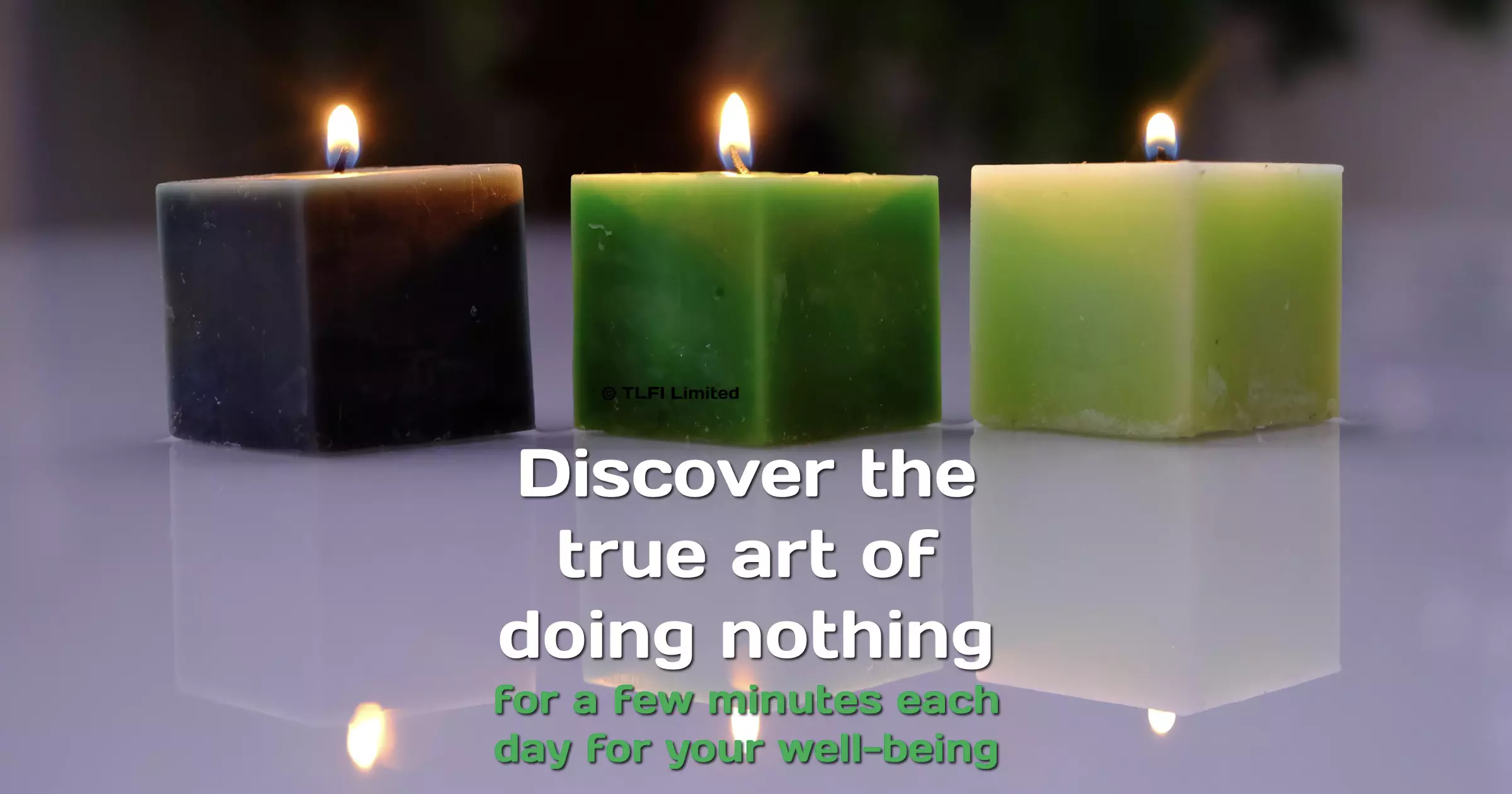
This is the art of doing nothing, for a few minutes each day. This isn’t a time for multitasking or engaging in activities. It’s a breather, a moment to sit still and just be. It is really about doing truly nothing. This is your time to disconnect from the world and reconnect with yourself.

Keep it pure and keep it simple. It is a time for you to just be, take a proverbial breather and try your best to empty your mind. To help you achieve this “me time”, you may find it beneficial to find a quiet corner of the garden or a room to sit. Just sit there quietly breathing, not thinking, not doing, not worrying, just being. You may struggle initially creating this time of pure nothingness, especially if you have an overactive mind or are prone to overthinking; but gradually with repeated application, you can achieve longer periods.

Creating this time for yourself each day is a small yet significant act of self-care. By dedicating just a few minutes to doing nothing, you can recharge, renew, and invigorate your mind and body. Embrace the simplicity of this practice, and witness the positive impact it can have on your overall well-being.