The Key to Personal Transformation

The exploration of how you think, and the unravelling of your thought patterns, offer you a key to making transformative changes in your life. Your thought patterns are the habitual ways in which your mind processes information and responds to situations. Often these processes and patterns of thinking operate proverbially below the surface, beneath the surface of your consciousness. However, these thought patterns shape your beliefs, behaviours, and overall life experiences. The notional journey of personal transformation involves peeling back the layers of these ingrained thought patterns, shedding light on their origins, and consciously reweaving the fabric of your cognitive landscape.

Unravelling your thought patterns begins with self-awareness and mindful observation of the recurring thoughts that govern your perceptions and actions. Identifying these patterns as they occur without attachment, can allow you to discern whether these mental habits contribute to positive growth and experiences, or hinder, confound or delay aspects in your life. Once recognised, the process of unravelling involves challenging and reframing the limiting or undesirable thought patterns. Once challenged, you can stop any reactionary or subconscious thoughts or actions. You can consciously choose thoughts that align with your aspirations and how you want to become.

The profound impact of unravelling thought patterns lies in its ripple effect across various facets of life. As you learn to be aware of your thoughts and actions, you can begin to dismantle the limiting cognitive processes which may have previously ruled or even ruined your life. This intentional exploration and transformation of your thought patterns act as a catalyst for improved personal development, empowering you to navigate challenges with newfound clarity, cultivate positive relationships, and ultimately shape a life aligned with your authentic self.

Navigating the Landscape of Emotions with Emotional Intelligence

Emotional intelligence embodies the ability to recognise, understand, and manage your own emotions while also being empathetic to the emotions of others. At its core, emotional intelligence empowers you to tune into your emotional states, deciphering the nuanced language of your feelings. This self-awareness lays the foundation for effective self-regulation, enabling you to respond thoughtfully, rather than reacting impulsively to the ebbs and flows of emotions. This heightened awareness of your own emotions and emotional states forms the basis for successful communication, conflict resolution, and the cultivation of meaningful connections.

By exploring the depth of your emotional origins, you can identify triggers and patterns that influence your emotional reactivity. As you begin to recognise the interconnectedness of your thoughts, emotions, and feelings, you can develop a better understanding of yourself. You may begin to realise that every emotional state you experience is a consequence of previous causes, and your current emotional landscape is affected by your thoughts, words, and actions, along with stored emotions and feelings from your past.

In the pursuit of personal and professional success, emotional intelligence is a path to harmonious relationships and individual well-being. By honing your skills of emotional self-awareness, self-regulation, and empathy, you can become an adept navigator of the emotional landscape. This heightened awareness allows you to take responsibility for your emotional well-being; as well as make mindful decisions to regain control over your emotional landscape. By cultivating this emotional intelligence, you can channel your energy toward positive, constructive, and uplifting emotions.

What You Think Matters

Thoughts are like the proverbial seeds planted in the fertile soil of your mind, sanctioned by the energies of your mind, thoughts have the power to sprout into the experiences that colour your existence. This rather simple, but often overlooked aspect of the human psyche is perfectly encapsulated in the adage “As you think, so shall you become.” Which underscores the influential role that your thoughts play in determining the trajectory of your life.

The impact of thoughts on your lives is not merely confined to the realm of self-fulfilling prophecies; it extends to the very fabric of your experiences and interactions. Your thoughts have a direct correlation to your emotions and feelings, affecting all aspects of your mental and emotional well-being. Positive thoughts act as catalysts for resilience, creativity, and growth; while negative or detrimental thoughts can cast shadows that dim the light of your potential.

Understanding this dynamic is a cornerstone of how thoughts impact your life. Taking a mindful approach to thinking can truly bring benefits. Recognise that the quality of your thoughts shapes the landscape of your emotions, affects your decisions, and ultimately, influences the reality which you inhabit. The profound truth is that what you think truly matters, serving as one of the architects shaping all aspects of your reality.

Karmic Threads – Understanding Life’s Interconnectedness

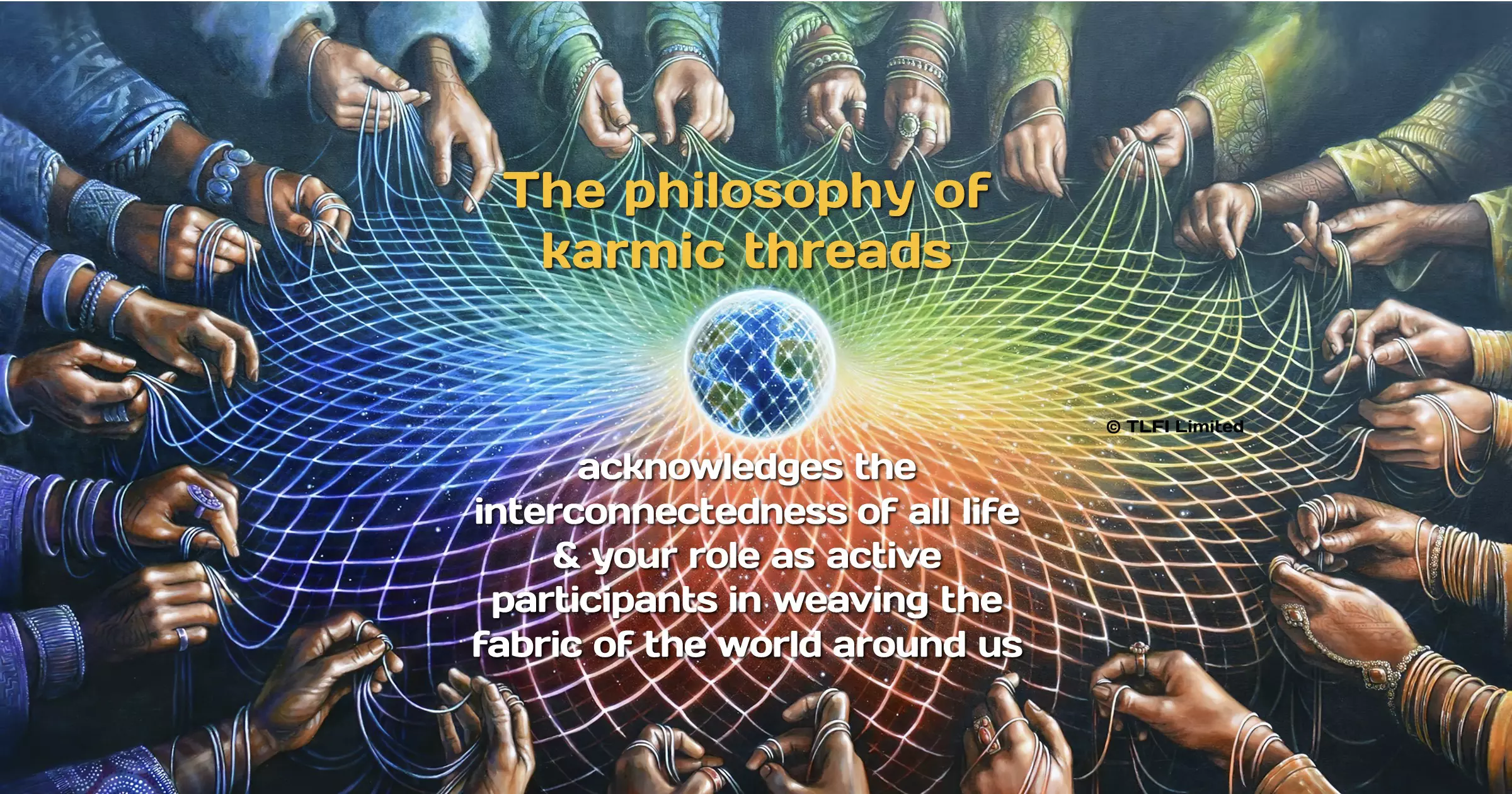
The concept of karmic threads weaves a narrative of interconnectedness that transcends time and space. Rooted in Eastern philosophies, karmic threads are built on the basis that every action, thought, and intention sets in motion a series of interwoven threads, creating a complex web that influences the course of our lives. Recognising that your present circumstances are not isolated incidents, but rather the outcomes of the intricate weaving of past thoughts, actions, and intentions into the tapestry of life.

The underlying principle of karmic threads is that of cause and effect, suggesting that the choices you have made reverberate through the fabric of your life and extend into the lives of others around you. By understanding the interconnected nature of your actions, it is possible to gain a small insight into the intricate dance of fate and free will. If you allow it, your awareness of these karmic threads can become a guiding force, inviting you to be more readily mindful and intentional in all aspects of your daily life. Weave threads which will benefit yourself and others, rather than creating threads which will disrupt the fabric of the world around you.

Karmic threads are also a reminder of the potential for growth and transformation. As you navigate the twists and turns of life, you encounter threads woven by yourself and the universe. Through conscious choices, you have the power to determine how to react to the karmic threads. You can choose to mend and strengthen the threads that bind us, fostering a tapestry of greater harmony and understanding. In embracing this philosophy of karmic threads, you embark on a lifetime journey of responsibility and empowerment, acknowledging the interconnectedness of all life and your role as active participants in shaping its unfolding narrative.

Emotional Alchemy Transforming Your Emotions

Some people have discovered great success by utilising a set of techniques known collectively as Emotional Alchemy. This pertains to the process of altering your emotions into different states. The concept can be likened to the alchemists’ objective of transforming ordinary metals into gold. Similarly, you possess the ability to transmute what may initially appear as negative emotions into higher ones, through the practice of awareness and understanding.

Starting the process of emotional alchemy requires embracing emotions without judgment or resistance. By ceasing to engage in a battle against your emotions, and instead becoming an observer with acceptance, you create room for transformation. When you acknowledge and validate your emotions, you honour your authentic self, your Life Force, thereby fostering an environment conducive to personal growth.

For an efficient restoration of emotional equilibrium, it is crucial to engage with your Life Force. Understanding emotions as a form of energy allows you to work with your Life Force for better comprehension and eventual transformation of those energies. By cultivating a harmonious connection with your Life Force, you can heighten emotional awareness and better regulate your reactions. Techniques such as meditation, yoga, qigong, and tai chi are structured to balance and enhance the flow of chi, establishing a solid foundation on which you can begin this transformative process.

Sorry can be the Hardest Word

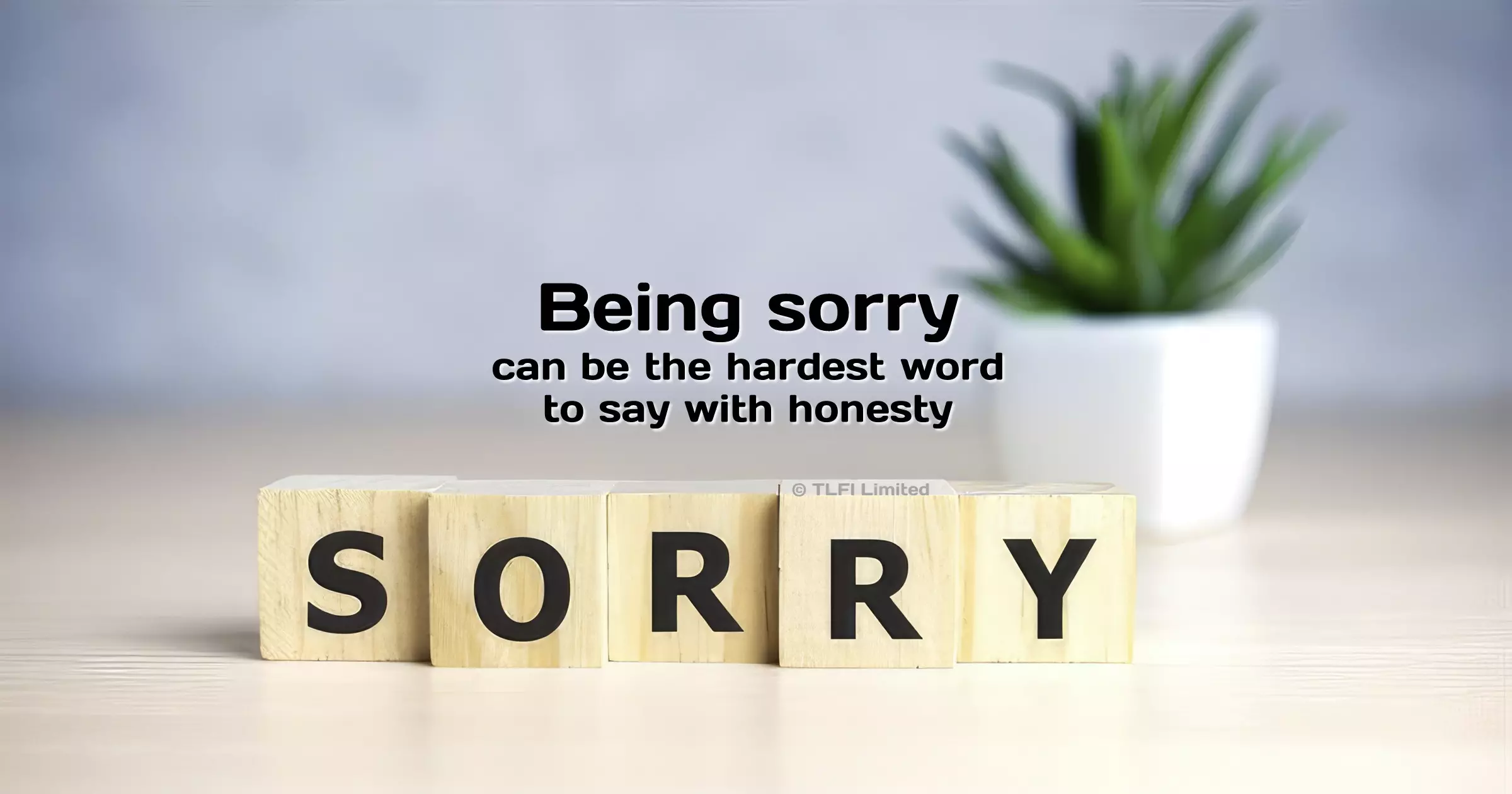
Do not be afraid to be the one to say sorry after an argument or disagreement, even if you think you are in the right. Being sorry is not about taking a proverbial side, winning or losing. It is an exploration into the realm of friendships and relationships which underscores the transformative power of humility, gratitude, and the acceptance that compromise should be seen as a cornerstone of harmonious connections.

In the heat of disagreements, the ego often stands tall, fuelling the belief that admitting fault or offering an apology is a sign of weakness. However, the opposite holds true. Apologising requires a deep well of strength and self-awareness, an acknowledgement that relationships are nuanced, and the pursuit of being right at the expense of connection is a hollow victory. Learning to say sorry becomes a bridge that spans the chasm created by disagreements, fostering understanding, and fortifying the foundation of trust.

The essence of compromise is a hard lesson to grasp, especially in a world that increasingly fosters individuality and the pursuit of personal desires. Yet, as you navigate the complex web of relationships, both personal and professional, hopefully, you may realise that compromise is not a surrender or loss. It is an acknowledgement that more often than not, we need to work together in life to achieve mutual understanding and shared happiness.

Gratitude becomes the natural offspring of the willingness to apologise and compromise. When you embrace the humility required to say sorry, it can help you to better appreciate the friendships and relationships around you. Gratitude allows you to shift the focus from what is lacking or perceived to be lost, to what is present or achieved. In the act of saying sorry, you can not only mend interpersonal bridges, but also cultivate a grateful heart that sees the richness of what already exists.

Realise that simply saying sorry can make such a difference, whether it is to defuse a situation or to make things right. So take the time to contemplate that being sorry is not so difficult to achieve.

Observation can be Your Teacher

The simple statement “If you observe, everything is your teacher” is often overlooked by people as they seek the next big thing in life. However, there is great wisdom in this statement which transcends traditional notions of learning, urging you to recognise that every moment and every circumstance carries within it the potential for profound insights and growth. This concept echoes the wisdom of many spiritual traditions while emphasising the interconnectedness of all things. Teachings are inherently embedded in the fabric of existence.

In adopting this perspective, you become open to the rich tapestry of lessons woven into the very fabric of life. Nature becomes a mentor, whispering lessons about resilience, impermanence, and interconnectedness. Interactions with people, whether harmonious or challenging, become mirrors reflecting various aspects of yourself, providing opportunities for self-awareness and understanding.

Observation is the real key to unlocking the teachings that permeate every facet of existence. It is the cornerstone of learning, and through mindful awareness, you can uncover the teachings that await in every moment. It is also an intentional choice to engage with the world with your open eyes and a receptive mind. When you adopt the mindset that everything is a teacher, the mundane can transform into the extraordinary, becoming a source of learning.

Embracing this idea that everything is a teacher, is a transformative shift in perception. It is an acknowledgement that growth is not confined to formal institutions or specific experiences, but is a continuous, ever-present journey.

Comprehending Planetary Effects

The location of the Moon and planets in a constellation at the time of your birth is part of your astrological programming or key code. The Moon and planets within our Solar System have an established and prescribed energy and influence, which are inscribed with positive as well as negative facets. They are the regulating forces of every little thing which takes place within our material continuance.

 Understanding the small nuances that these celestial objects can influence, is the key to understanding the diverse nature of human astrological key codes. The richness of the variability of energy patterns helps you to better understand why very few individuals will react or think the same way.

The Moon and planets of the Solar System also provide keys to bring about changes in your ways of thinking and reactions. The Moon magnifies your emotions through the strong magnetic energies it exerts upon the Earth. Mercury strongly influences the mind. Its location at your time of birth imprints patterns on how your mind will operate. Venus strongly implants the patterns of emotional reactions within your psyche. Mars for the basis of your attitude to life, your drive and motivation and rules your personality, often being your own mirror. Jupiter has a strong governing aspect in your life, your material progress and your well-being. Saturn regulates the deep-seated or subconscious aspects of your way of thinking and can provide one of the biggest challenges through its amplification of karma. The outer planets and bodies of the Solar System including Uranus and Neptune, are the driving force behind the inner planets; whereas Pluto (although now no longer recognised as a planet by the IAU) is to higher inner evolution.

Discover Astronomical Astrology for a wealth of additional information on True Astrology.