Bringing True Focus

The capability to really focus your mind is a pivotal aspect of any kind of meditation, mindfulness and certainly many facets in your life. If we were to evaluate the populace in its entirety, it would be discovered that a very small percentage of individuals have the inherent capacity to really focus and quieten their minds without concentration. While roughly two-thirds of the population will regularly struggle to bring focus to their minds. When your thoughts lack focus, it is akin to light travelling through a prism contrasted to light going through a magnifying glass. While the light transverses both the prism and the magnifying glass, what occurs to the light on the journey is very different. The same holds true of your thoughts, where you can learn how to focus your thoughts, as opposed to letting them become scattered or dispersed. This is becoming considerably more important as our awareness or attention spans are diminishing, along with our capacity to retain relevant information as a result of the arrival of social media and contemporary InfoTech.

What approaches can be utilised to aid in bringing true focus to your minds and thoughts and not on the occasional time that you remember to practice? Most techniques which are embodied in mindfulness and meditation can assist you to focus your thoughts, but you may wonder how can this work.

One of the most effective tools to achieve focus is Ekagrata. Though the techniques of Ekagrata are typically only beneficial for a tiny percentage of individuals who have actually been determined to tame their minds and invested the hours of training.

For a lot of people, making use of sounds such as chimes or gongs can provide an external stimulus which will assist in focusing your mind. People can then focus on the sound, as opposed to the various other thoughts which float around their minds. With this focus, you can then establish calmness within, which can then provide the basis for you to discover more advanced or sophisticated aspects of meditation.

Conscious breathing and techniques similar to Breathe with Purpose; which are free, can offer an alternative effective way to help focus the mind. Such techniques are notably beneficial for applying positive affirmations. These are just a few of the numerous techniques which can be leveraged to help you. The most important aspect is your ongoing efforts to bring focus to your thoughts.

Be Aware as you Walk

Walking can be beneficial on many different levels. Walking has been used as a means for becoming calm, helping to quieten the mind and even for spiritual advancement for countless years. People are gradually starting to rediscover the diversion and basic enjoyment of walking. A walk can be included in a break at work or at any time of your choosing. If you are experiencing stress or anxiety, then taking a walk may well enable you to ease some of this mental anguish, frequently giving you an opportunity to bring a different perspective to the situation. While we can all appreciate that going for a walk in the country, or other nature spots may be the most beneficial, realise it is the walking which is the catalyst for your changed thinking. Simply taking a brief walk around the block or around the local park can have a beneficial effect on your day.

The basic act of choosing to go for a walk, allows you to have a change of surroundings. This change alone, may be sufficient for you to be more mindful as you are no longer immersed in the situation. The removal of yourself for a particular situation or location is just as important as the act of the walk itself. This is because you actively remove yourself from the emotional triggers, thoughts or energy which were at your previous location. With the proverbial change of scenery, you have the opportunity to enjoy the experience of the walk itself.

As you walk, attempt to be aware of the sensations within your body, such as the motion of your legs or arms, and be aware of your breathing. Depending on where you have gone for a walk, you may additionally take in more of the environment around you. You may become more conscious of the sounds which constantly float into your ears, the smells which fill your nostrils as you breathe, or even the temperate of the air or the feeling of the sun on your skin. All of these acts of awareness or observation of the world around or within you, can help to change the way you think if you allow it.

Often one of the biggest challenges is that when people go for a walk as a break, they bring their problems with them, rather than doing their best to leave them behind so that they can really benefit from the walk. Take some time out and go for a walk to avail yourself of the opportunity to be more mindful, take a break and refocus. You may well find your thinking will be sharper and your mind clearer after a beneficial break.

What You Think You Become

How many times have you become aware of the expression “You become what you think” or variants on the same concept? Your thoughts are more than simply thoughts, they are what guide you through life and define you. They shape your perspective of the world and those around us. If you believe you can be successful, typically, you will achieve some form of success. However, if you believe you will fail, then more often than not you will face challenges and not succeed. This does not imply that you are prophetic, it just means that you generally believe and act out what rattles around inside your head.

Your mind is a powerful tool when used correctly, but it can also be your own worst enemy. You may not know it, but for most people, your mind can play tricks on you. If you think you cannot do something, at that point you have set yourself up for failure. Before you have even begun you are questioning whether you will be successful, it is a formula for calamity.

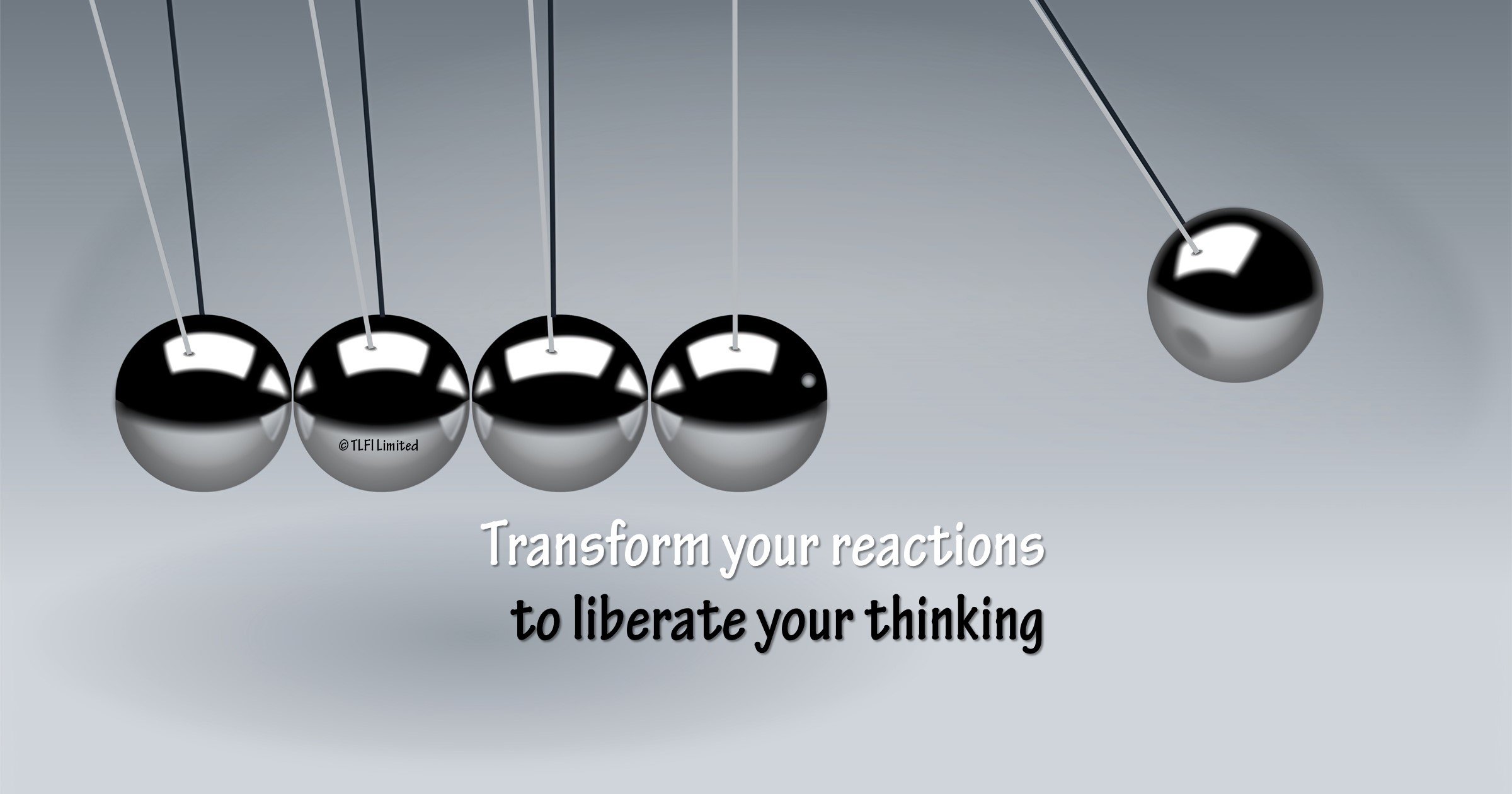
Buddha stated, “The mind is everything. What you think, you become“. As you probably have picked up from the above paragraphs, there is an honest truth in this statement. It then follows that if you can control your mind, you can help to direct and guide the direction of your life. We live what we think about constantly. These thoughts might be intangible, however, their power lies in the way they affect and influence us. For every thought or action, there is a reaction or effect. This correlates to the observations made by Newton when he detailed his third law of motion. Realise that your thoughts and reactions all have effects and consequences. There is always an effect even if you do not witness the result. Your thoughts and reactions in life can result in an accumulation of emotionally charged energies within you. These energies can have damaging or detrimental effects on your body, sometimes bringing about illness.

We have the capacity to choose how we feel and to dictate how we will live our lives. That is why our thoughts are so significant, due to the fact that they determine virtually every element of our lives. You can either be shackled by your thoughts or set free by them. If you want to transform your thought process and improve your quality of life – you must take action. So begin to take control of your thinking and reactions to make sure that you only build beneficial energies of thought.

Understanding Karma

Karma is a core notion in many Eastern beliefs, including Hinduism and Buddhism. Today, people often incorrectly make use of the word karma to denote luck, destiny or fate. However, if you take a look at the traditional meaning of karma, it means action. Modern science and Newtonian Physics reveal that for every action, there must be an equal and opposite reaction. So the energy created by action needs to be returned, and this is the basis of karma. Karma in itself is neither good nor bad, it is merely labelled that way by people. An often misunderstood aspect is that karma applies to your thoughts and words and not just your actions. So karma very simply explained is, the principle of cause and effect emerging out of any thought or action.

In addition to the karma created from your own actions, you are subjected to the Karmic influences of your family, faith, race, nationality, and more. Every circumstance you encounter in life is the result of some karma and can generate more. You constantly create karma from your actions, thoughts, and words, as well as from your attitudes, expectations, and lifestyle. You create karma from the intended actions you perform knowingly, and likewise from actions carried out unconsciously, whether they be through ignorance or even lack of knowledge. It is additionally possible to take on another person’s karma, which generally is not a good idea since most of us have enough of our own.

Whether you believe that karma depends on continuing cycles of reincarnation, or not, karma implies that you have created and continue to create karma in your life. Karma can have both short-term and long-term effects as it impacts you on many various levels, some of which are not perceived nor immediately evident. Unfortunately, many of us allow ourselves to continue to be controlled by our karma, frequently destined to perform the same habits over and over within this lifetime.

Like it or not, karma cannot be avoided; however, it can be diminished or prevented. The most important thing to remember is that karma can be transmuted or changed. Not only can your choices determine the quality of new karma being created and stored to be released as future events in your life, but there are ways to reduce karma. The best way to reduce karma is to be proactive in your thoughts and actions to decrease the cycle of cause and effect. Each and every moment you should make every effort to be aware of the possible effects or ramifications of your thoughts, actions, or inactions at any point in time. Instead of instantaneously reacting to life, pause to consider your various courses of action, before proceeding. This careful application of containment will aid you to reduce the accumulation of karma and permit you to break free of the karmic chains which bind you into a set pattern within your life.

Change to a Higher Frequency

What you may consider an emotion is often the experience of energy progressing through your physical body. This energy is derived from your original thought or the replaying of feelings associated with thought, or past experiences, especially if they have strong attached feelings. We all experience emotions differently, however they all occur as energy frequencies within the component parts of the human mechanism. Feelings are the perception and also the labels we apply to the respective emotion, such as happy or sad. It is the feelings which are stored within the human mechanism at the associated frequency of the emotion, and which are called upon when we dwell on thoughts or emotions of the same frequency.

Emotions per se are neutral, is in they are an energy form. However, coarser, or what some would definitely label as negative or adverse emotions resonate at lower frequencies. Make the effort to shift the frequency of your thoughts, emotions and feelings to a higher frequency, to bring more positivity right into your life.

Accessing the Powers of Your Life Force

The living vitalities which exist in all living things, manifest as your Life Force . While a lot has been blogged about the innate power source of the human mechanism, you may still consider that this is a mystery or a secret. You may well relate to your Life Force energy as an inner awareness, your genuine soul or spirit, to label but a small few. Some may see this idea of a separate indwelling power as mystical, strange, obscure or even intangible. The opportunity to work with your Life Force energies is not a secret nor an enigma but it is possible through the advanced meditation skills of Cognition (a real calmness of mind) and Ekagrata (focused thoughts).

Change with IOEA

Throughout the day your conscious and unconscious minds take in all forms of information and sensory perception. Your minds not only process all of this information but also reacts to this stimuli, whether it is right, wrong, sometimes inappropriate or at other times seemingly indifferent.

The simple mantra of IOEA (Inhale, Observe your breath, Exhale, Awareness of your thoughts) applied as you breathe can help you moderate your reactions and allow you to choose how you will respond in life. As you Inhale, simply take the moment to Observe your breath. Do not try to overcomplicate things, as this simple act of Inhaling and Observing will allow you to pause any seemingly unconscious reaction. Then as you Exhale, take the moment to apply some Awareness to your thoughts and thinking. You may find for more difficult situations that you will need to repeat the cycle of IOEA a few times so that your unconscious thoughts or reactions do not see the light of day. Instead, with awareness, you may choose to respond differently rather than reacting.

Transform Your Reactions

Stop and discover how to command your mind, instead of your mind, emotions and feelings being the commander of your life. Tapping into the energies of your inner light or Life Force through cognition can aid you to shift away from the patterns of your passive intellect. Doing so permits you to liberate your thinking as you release your way of thinking from your mental and emotional limitations and the associated reactions of the lower consciousness.

Using these skills of meditation or cognition in everyday life can enable you to shift your cognitive and mental wavelengths to become calm, well balanced and in control rather than the reactions of your lower consciousness being the master of your life and destiny.