Discover the Comma to Pause

Embarking on the journey of life can sometimes feel like attempting to read a book or article without any punctuation; it can seem rushed, chaotic, and lacking the necessary pauses for reflection. Discovering the metaphorical comma draw in life introduces moments of pause and contemplation into our daily lives. Much like a well-placed comma in a sentence, these pauses allow us to take a breath, absorb our experiences, and give careful consideration to the unfolding narrative of our existence.

In this context, the comma draw in life serves as a deliberate choice to embrace moments to increase your awareness and deliberate introspection. In a society that increasingly glorifies constant activity and perpetual motion, the act of pausing as you notionally grab a comma becomes an important act of self-care. You are deliberately recognising the spaces between the hustle and bustle as opportunities, giving that chance for a pause, and fostering a deeper connection with yourself. By intentionally incorporating these commas (moments of stillness and reflection), you can add depth and meaning to the narrative of your life, allowing the richness of experience to settle and resonate, rather than pass by.

The art of the comma to pause, extends beyond personal well-being; it can influence the quality of our interactions and relationships. Just as a well-placed comma clarifies the meaning of a sentence, moments of pause in our interactions can enhance communication, foster understanding, provide time to think and nurture genuine connections. By embracing the metaphorical comma draw, you not only create a space for your thoughts but also open the door for more meaningful and nuanced dialogues with others. In a world that often values speed over everything else, discovering the power of the comma, offers the ability to pause, adding a layer of mindfulness and intentionality to our busy lives.

Embracing Simplicity in a Complex World with Zen Living

Zen living provides a means for some of us to embrace simplicity amid complexity. Rooted in Zen Buddhism, this approach to life transcends a mere aesthetic preference for minimalism; it is to cultivate mindfulness and intentional living in every aspect of your daily existence. At its core, taking up the principles of Zen living involves stripping away the unnecessary layers of clutter, both physical and mental, to reveal the pure essence of the important aspects of your life. Many have found this a very therapeutic approach to life.

For those of us who have taken this approach to life, embracing simplicity in this complex world is a conscious choice. You choose to prioritise what truly matters, and in the process build a deeper connection with the here and now. One of the hardest aspects is to release attachments to societal expectations and the many associated aspects of material possessions. For those of us who have been able to achieve this, even if in some small way, it allows space for clarity and a heightened awareness of the real richness inherent in each moment. Whether through minimalist home environments, or contemplative meditation, Zen living can provide a means to navigate the complexities of modern life with grace and serenity.

In the modern world, which is characterised by constant noise and distraction, the principles of Zen living offer you a sanctuary of tranquillity. Taking up Zen living is not a proverbial quick fix; it is an ongoing practice that invites you to find joy in the simplicity of existence, fostering a profound appreciation for the beauty that emerges when you take the time to appreciate the moment and what life has to offer.

Mindfulness as a Stepping Stone

Mindfulness can be an effective tool and serves as a stepping stone towards attaining enhanced self-awareness and inner peace. It promotes conscious awareness of your thoughts, emotions, and physical sensations “in the present moment” while fostering an accepting and non-judgmental attitude towards yourself and others.

However, mindfulness alone is not enough to bring about lasting transformation. To achieve enduring change, it is crucial to cultivate wisdom, compassion, and other affirmative qualities. This necessitates a committed and continuous endeavour to train the mind through practices like meditation, self-reflection, and improved awareness.

Ultimately, the goal is to develop a deep understanding of yourself and the world around you and to cultivate a sense of inner peace and well-being that is not dependent on external circumstances. This is a lifelong journey that requires patience, perseverance, and a willingness to embrace change and growth.

How Sound Can Boost Your Meditation

Meditation is a practice that has been around for centuries for many good reasons. It is a powerful tool for reducing stress, improving focus, enhancing your well-being and unlocking your spiritual awakening. While there are many different forms of meditation, one aspect which can be overlooked or conversely overemphasised is the use of sound.

The application of sounds during your meditation, whether natural or intentionally generated, has the potential to boost or enhance the meditative state through several key aspects. The harmonious melodies of nature, the soft cadence of chanting, or a gentle rhythm, can all serve as powerful catalysts for a meditative experience that surpasses the ordinary.

As you start to practice meditation, you may find that your mind teems with thoughts and distractions, which hinders your ability to properly meditate. The use of wisely chosen sounds of nature, such as flowing water, rustling leaves, or bird songs, can act as harmonious companions during meditation. These sounds, often associated with serenity, create a backdrop that eases the mind into a state of relaxation. By immersing yourself in the gentle cadence of these natural sounds, helps to keep you focused, so the chatter of the mind does not disrupt your meditation.

Secondly, sound can be used to help directly induce a meditative state by calming the mind and nervous system. Certain types of sounds, such as binaural beats and white noise, have been shown to have a calming effect on the nervous system. Additionally, the application of a rhythmic pulse of binaural beats can, for some people, create a sense of synchronisation and harmony between the left and right hemispheres of the brain. Through the application of these sounds, you may be able to more easily enter a meditative state due to a harmonised mind and relaxed nervous system.

Thirdly, the use of sounds, such as the resonant tones of chimes, gongs, singing bowls and the like, can be applied as intentional tools for meditation focus. These sounds, carefully chosen for their vibrational qualities, can be used to anchor the focus of your mind. The rhythmic repetition of sounds can help synchronise your awareness to your breath, creating what some describe as a cohesive and meditative experience. By attuning to these intentionally created sounds, you can help focus your mind to cultivate a heightened sense of presence, allowing the mind to settle into a tranquil state conducive to deeper meditation.

If you are looking for a way to kick-start or boost your meditation practice explore the many different applications of sound. There are many different types of sounds, including silence which can be used in meditation. Find one that works best for you. Once you become more proficient at meditation, you will likely find you no longer need the use of sound to boost your meditation.

Using Mantras

The use of mantras has been a part of many spiritual traditions for thousands of years. Mantras are sounds, words or phrases that are repeated over and over again during meditation or other spiritual practices.

The use of mantras can calm the mind primarily by focusing your thoughts. It is this ability to focus your thoughts which is the real power of Mantras, as it allows you to overcome some of the distractions which your mind generates. The sound vibrations of the mantras can resonate with different energies within the human energy mechanism, to promote a greater sense of balance and harmony, and promote a sense of peace and inner tranquillity.

Different mantras are associated with different benefits or intentions and are often chosen based on the individual’s spiritual beliefs and goals. For example, the mantra “Om” is often used to promote a sense of unity and connection with the universe and is commonly used in many different spiritual practices.

The use of mantras can be a powerful tool for spiritual growth and self-discovery. They can help you to deepen your connection to your inner self and the universe.

Everyday Happiness

Life is predominantly composed of ordinary moments, far outnumbering the extraordinary ones. Whether you are patiently queuing at the supermarket, enduring the daily commute to work, or tending to routine tasks such as feeding pets or doing the washing, the ordinary hours make up the fabric of your existence.

The essence of true happiness lies in the ability to discover moments of joy and fulfilment within the seemingly mundane routines of daily life. Real happiness is about finding beauty in the simplicity of everyday life, appreciating the small pleasures that weave through the tapestry of ordinary hours.

It can be as simple as witnessing the magic of how sunlight bounces off the corner of a sugar crystal left on the side of your coffee cup in the morning. Then through being open to the experience you have noticed how the sunlight reflected through that sugar crystal is scattered in a rainbow of colours onto an otherwise plain wall. Then recognise that happiness, joy, wonder or contentment can flourish in the most unassuming moments.

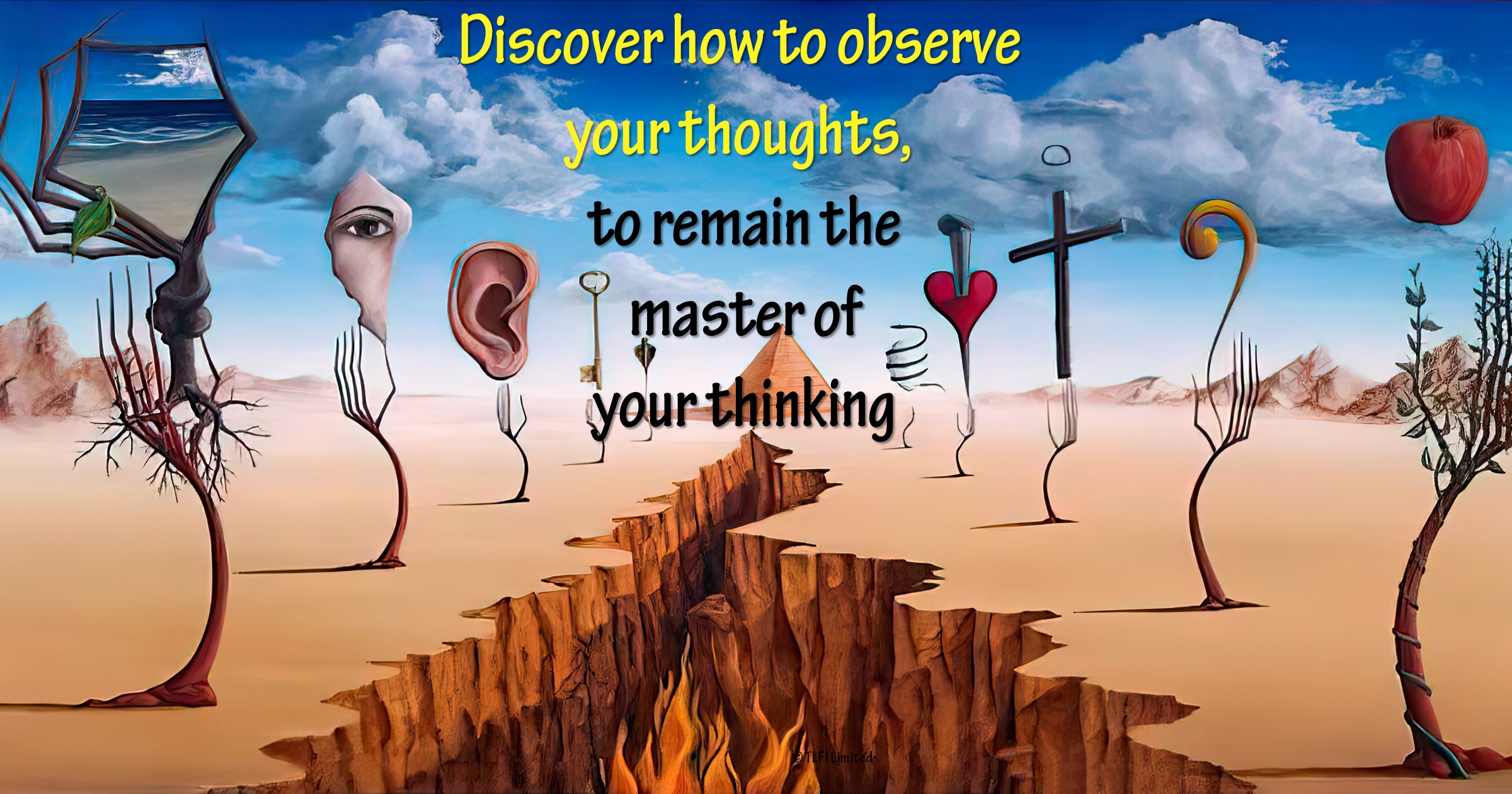
Discover How to Observe Your Thoughts

Many of us are not aware of how active our minds are throughout the day generating a huge number of thoughts. If you stop for a moment, as you try to quieten your mind, you may soon discover the myriad of thoughts which abound within your mind. It is not uncommon that the harder you try to find a proverbial quiet corner, the more thoughts you are likely to discover. This clearly proves that your mind is forever busy often generating thoughts which do not fully register in your consciousness. The challenge is that with so many thoughts rampaging through your mental mind and subconscious mind, is that you could be reacting to thoughts without even realising they were present in the first place.

We can all do ourselves a proverbial favour by spending some time learning to listen to or observe the thoughts which flow through our minds, whether they be conscious or subconscious thoughts. As you become more skilful at listening or observing your thoughts, you can begin to identify any critical, malicious or negative thoughts or ideas before they take hold within you. Catching such thoughts early on means that you can more easily change them to something of a more positive nature.

There are many different methods you can utilise to observe your thoughts, from the use of simple mindfulness, through various forms of meditation, to advanced studies in Cognition. The key to all of these methods to be successful is that you should observe your thinking as if you were looking from the outside. The best analogy is that as the observer of your mind, consider that you are witnessing a film or a play unfolding. As you witness these thoughts, do your best to remain the observer. Do not allow your emotions to drag you into the narrative, otherwise, you will start living out the thoughts rather than being the observer.

Staying Awake in Meditation

It can be common for people to struggle to remain awake on occasions during meditation due to three separate factors (see later on). Regardless of the explanations for having this propensity to doze off, the key resides in applying your awareness. Becoming aware is a core competency to be acquired through meditation, so, intriguingly, being aware is the key to not zoning out during your meditation activities.

The most common reason for people having a tendency to doze off during meditation is unsurprising a result of their hectic or frantic lives. If you have had a busy day or have struggled with stress, then you might identify that you often become drowsy during your meditation. This is simply because your body begins to destress from the pressures of your life as you perform the meditation activity. If you regularly experience this, then take time out to stand or splash some water on your face before proceeding. During the afternoon, lots of people experience an energy slump which can affect them when meditating. If that is the case, then it could be more beneficial for you to practice meditation in the morning when the body is awake. It is also common that a relaxed posture can contribute to the impulse to nod off, so take the opportunity to get started with some improved posture before you start your meditation. It does not mean that you need to sit in a contorted position, just becoming more aware of your body is the key.

A much more bewildering reason why you may become sleepy during your meditation is that your mind is proactively functioning to control your life. This might sound like a dichotomy that falling asleep is because of the activity of your mind. Yet it is effectively your mind which is applying control over you, hindering your ability to successfully practice meditation. In this way you might feel as though you are not succeeding, and that you cannot meditate. When the fact is, your mind is compelling you to be this way to ensure that it can preserve control. If you continue to meditate, you can strive to take back control from your mind, nevertheless be aware that your mind is most likely to strongly resist giving up control at any cost.

The final aspect which is seldom taken into consideration is that through the process of learning to meditate, you can awaken some of the inner energy of your true self. As the energy of your Life Force flows into your body, this can initially lead to a sensation of tiredness or even phasing out. This is simply because your body and mind are not accustomed to these kinds of energy apart from the minuscule quantities which are necessary to keep the human mechanism alive. If you are experiencing zoning out, then the key once more is the application of awareness. Being aware, as mentioned previously, is a cornerstone of meditation and it is never truer than when your Life Force energies begin to come to the fore via advanced meditation. As you apply your awareness, know these energies flow through the energy pathways (meridians) of your body. This knowing, through your awareness, will assist you to maintain your focus and not zone off.