
Ekagrata a State Beyond Mindfulness

Ekagrata is a Sanskrit word that translates to “one-pointedness” or “single-mindedness”. It refers to a state of focused attention in which the mind is completely absorbed in a single object or activity, and all other distractions and thoughts are temporarily set aside.

While mindfulness emphasises a non-judgmental awareness of the present moment, Ekagrata takes this further by focusing the mind on a specific activity or object. Some activities such as yoga, qi gong or tai chi can help you to focus your mind through physical activities. Other practices, such as visualisation or creative imagery, can act as a supplement to focus the mind through mental acuity. In all of these activities or applications, the one common element is that it takes practice to apply Ekagrata to bring a real focus to your mind.

In the state of ekagrata, the mind becomes fully absorbed in the present moment; you set aside all other thoughts and distractions to focus with single mindedness. However it is important to be aware that this single-mindedness is not that associated be being stubborn, it is about being focused. Similarly, the one-pointedness is about keeping that focus, but not being so focused that you proverbially burn yourself out.

It should then go without saying that Ekagrata e can lead to improved clarity, and heightened awareness, helping you to grow beyond the fledgling steps of being in the moment with Mindfulness.

Many of the techniques available from The Life Force Institute provide a mixture of methods aimed at helping you achieve the real focus of Ekagrata. Some of the methodologies include the application of directives within the Life Force Mind, specially crafted hand gestures, and well documented activities to aid in your visualisation when undertaking any activity. Different methods will be more effective for different people. We are all different in how our minds operate and what will help to achieve improved focus and clarity.

Ekagrata a State Beyond Mindfulness

Ekagrata is a Sanskrit word that translates to “one-pointedness” or “single-mindedness”. It refers to a state of focused attention in which the mind is completely absorbed in a single object or activity, and all other distractions and thoughts are temporarily set aside.

While mindfulness emphasises a non-judgmental awareness of the present moment, Ekagrata takes this further by focusing the mind on a specific activity or object. Some activities such as yoga, qi gong or tai chi can help you to focus your mind through physical activities. Other practices, such as visualisation or creative imagery, can act as a supplement to focus the mind through mental acuity. In all of these activities or applications, the one common element is that it takes practice to apply Ekagrata to bring a real focus to your mind.

In the state of ekagrata, the mind becomes fully absorbed in the present moment; you set aside all other thoughts and distractions to focus with single mindedness. However it is important to be aware that this single-mindedness is not that associated be being stubborn, it is about being focused. Similarly, the one-pointedness is about keeping that focus, but not being so focused that you proverbially burn yourself out.

It should then go without saying that Ekagrata e can lead to improved clarity, and heightened awareness, helping you to grow beyond the fledgling steps of being in the moment with Mindfulness.

Many of the techniques available from The Life Force Institute provide a mixture of methods aimed at helping you achieve the real focus of Ekagrata. Some of the methodologies include the application of directives within the Life Force Mind, specially crafted hand gestures, and well documented activities to aid in your visualisation when undertaking any activity. Different methods will be more effective for different people. We are all different in how our minds operate and what will help to achieve improved focus and clarity.

Surpassing the Limits of Your Mind

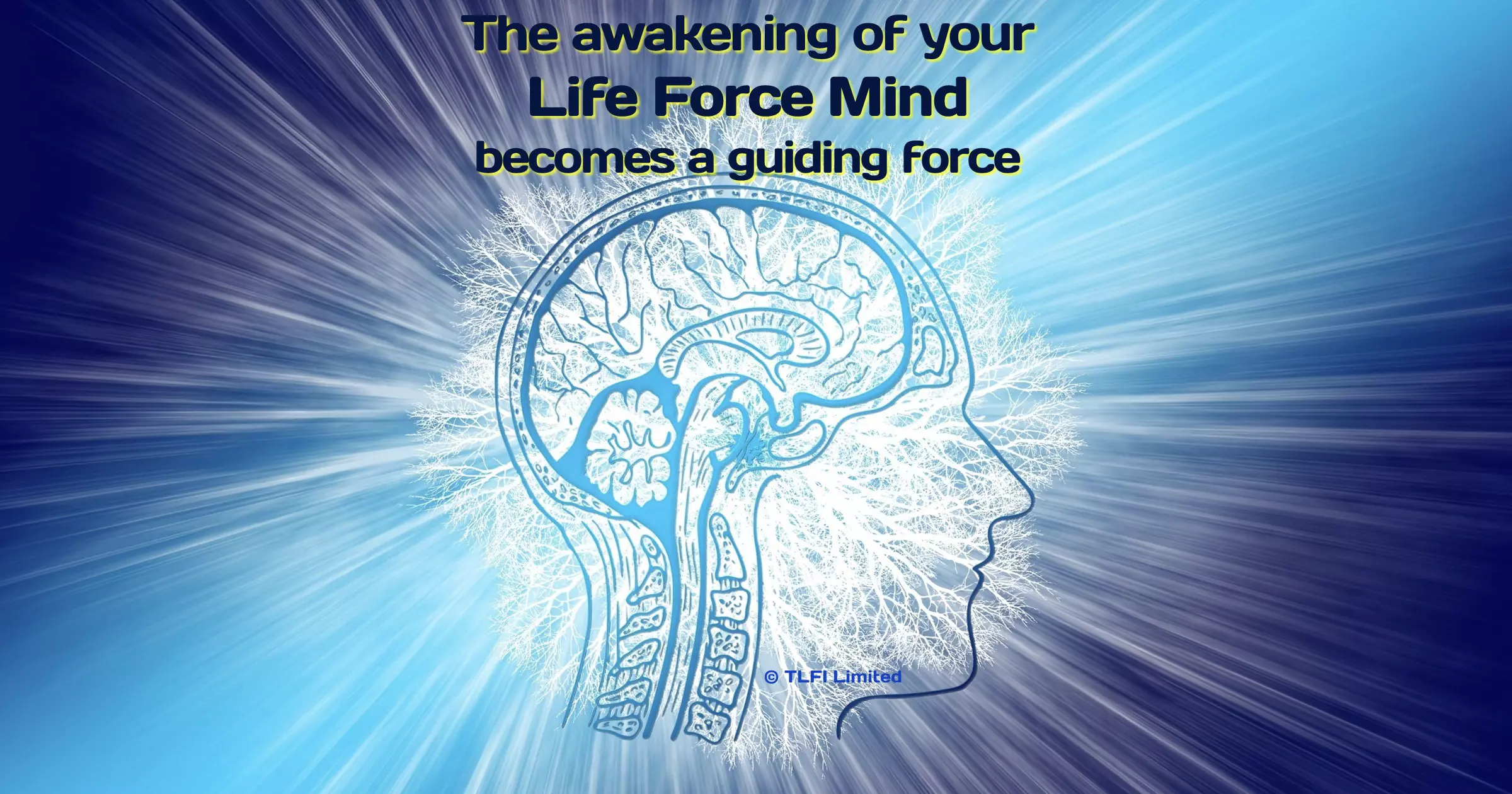
The journey of surpassing the limits of your mind unfolds as you begin to balance and harmonise with the energies of your Life Force, unlocking the transformative power that lies within the depths of your being. At the heart of this journey is the delicate balance and harmonisation with the energies of your Life Force. As you consciously engage with your Life Force, a transformation begins with the gradual awakening of the Life Force Mind. The awakening of your Life Force Mind marks a shift from the dominance of the mental mind and passive intellect, to one where the Life Force Mind begins to assert control.

As the Life Force Mind asserts control, you will gain a heightened ability to navigate the ebb and flow of emotions and to better master your thoughts. However, it is important to realise that this is a transformative process, and is not a rejection of the mental mind. It is an elevation of consciousness that transcends the limitations of mere cognitive processes, giving you a profound sense of inner stability in the face of life’s challenges.

Life Force Meditation enlivens the Life Force with a dedicated purpose of thought. It transcends the boundaries of typical meditation states, mindfulness, and positive thinking, all of which, while valuable, remain tethered to the limitations of the mental mind. Through the application of directives or commanding thoughts placed in the back of the mind, you can gradually awaken these unrealised aspects of your Life Force.

As you engage in Life Force Meditation through the use of Cognition, you will discover a realm where thoughts are not just fleeting patterns, but expressions of a higher, more expansive awareness. The potential is within each of us to awaken to a state where the mental mind becomes a tool, not the master, and the Life Force emerges as the guiding force toward a more profound and harmonious existence.

How Sound Can Boost Your Meditation

Meditation is a practice that has been around for centuries for many good reasons. It is a powerful tool for reducing stress, improving focus, enhancing your well-being and unlocking your spiritual awakening. While there are many different forms of meditation, one aspect which can be overlooked or conversely overemphasised is the use of sound.

The application of sounds during your meditation, whether natural or intentionally generated, has the potential to boost or enhance the meditative state through several key aspects. The harmonious melodies of nature, the soft cadence of chanting, or a gentle rhythm, can all serve as powerful catalysts for a meditative experience that surpasses the ordinary.

As you start to practice meditation, you may find that your mind teems with thoughts and distractions, which hinders your ability to properly meditate. The use of wisely chosen sounds of nature, such as flowing water, rustling leaves, or bird songs, can act as harmonious companions during meditation. These sounds, often associated with serenity, create a backdrop that eases the mind into a state of relaxation. By immersing yourself in the gentle cadence of these natural sounds, helps to keep you focused, so the chatter of the mind does not disrupt your meditation.

Secondly, sound can be used to help directly induce a meditative state by calming the mind and nervous system. Certain types of sounds, such as binaural beats and white noise, have been shown to have a calming effect on the nervous system. Additionally, the application of a rhythmic pulse of binaural beats can, for some people, create a sense of synchronisation and harmony between the left and right hemispheres of the brain. Through the application of these sounds, you may be able to more easily enter a meditative state due to a harmonised mind and relaxed nervous system.

Thirdly, the use of sounds, such as the resonant tones of chimes, gongs, singing bowls and the like, can be applied as intentional tools for meditation focus. These sounds, carefully chosen for their vibrational qualities, can be used to anchor the focus of your mind. The rhythmic repetition of sounds can help synchronise your awareness to your breath, creating what some describe as a cohesive and meditative experience. By attuning to these intentionally created sounds, you can help focus your mind to cultivate a heightened sense of presence, allowing the mind to settle into a tranquil state conducive to deeper meditation.

If you are looking for a way to kick-start or boost your meditation practice explore the many different applications of sound. There are many different types of sounds, including silence which can be used in meditation. Find one that works best for you. Once you become more proficient at meditation, you will likely find you no longer need the use of sound to boost your meditation.

What is the Light of Knowledge?

The Light of Knowledge is the first stage on the pathway of light as you begin the journey of self-discovery and spiritual awakening. It signifies the illumination of higher aspects of the self, revealing layers of consciousness and wisdom previously veiled in the shadows. It is a process of gaining profound insights into the nature of your being and understanding the intricate tapestry of thoughts, emotions, and feelings that shape your identity.

This knowledge is not confined to the surface, but delves into the depths of the soul or Life Force, unravelling the timeless truths that transcend the boundaries of ordinary perception.

Simultaneously, the Light of Knowledge extends its radiance to the energies flowing within and around you. It is an awakening to the subtle currents and vibrations weaving through the fabric of existence. This stage involves recognising the interconnectedness between yourself and the cosmic energies, fostering a deep sense of unity with the universal force.

As you progress in your understanding of the human mechanism, you gain insight into the operation of your mind and become more aware of the energies of your Life Force. This understanding and insight serve as a foundation for subsequent phases of the journey into higher states of consciousness. It is a journey that goes beyond intellectual understanding, providing you with the opportunity to integrate this newfound knowledge and learning into your life.

Ultimately, the Light of Knowledge is a beacon that beckons seekers such as yourself to delve deeper. Bathed in the transformative light of knowledge to explore the limitless realms of your inner

Comprehending Your Intuition

Deep down within all of us is a wellspring of wisdom, which is colloquially referred to as intuition. Listening to your intuition is a slow-learned process and one which some people never master in their lifetime. It starts by recognising that tiny inner voice or feeling that will tell you when you have done something wrong, or you may get a gnawing feeling in the pit of your stomach.

Some may consider the inner voice of intuition as your consciousness; however, it is actually your Life Force trying to bring some balance to your life and directing you in the proverbial right direction.

Taking the opportunity to listen to this inner voice or intuition is an important part of any spiritual journey. However it is imperative to recognise that this is not the voice of your mental mind, but that of your true inner self.

Discovering Vacuus and Sunya

An important aspect of some meditative practices relates to achieving a nothingness or emptiness within. Vacuus and Suyna are terms with their roots in Buddhist and Taoist philosophy referring to a state of emptiness or nothingness, but with slightly different nuances. While these aspects can be described and used separately, both practices relate to achieving a nothingness or emptiness within. Vacuus and Suyna can be used together for greater effectiveness, allowing a more transformational state of being.

In Latin the term Vacuus rather simply means empty, emptiness or void, that being the lack of substance. In Buddhist philosophy, Vacuus refers to the emptiness or lack of existence of all phenomena. This emptiness or lack of substances, sometimes referred to as the void is seen as the ultimate nature of reality. Some people may spend a significant amount of time meditating just on this one aspect of creation, becoming Vacuus.

Sunya on the other hand is a Sanskrit term that means emptiness but with a slightly different context where zero (or nothingness) is the source of everything. In Taoist philosophy, Sunya refers to the emptiness of the universe, which is seen as the source of all creation. This emptiness is importantly not empty as one may think, but rather the potentiality which exists within the void and the potential which lies within all of us.

When both Vacuus and Sunya are used in concert, they both harmonise to focus your meditation on the importance of cultivating a sense of openness and a true emptiness with the mind. There is much which can be learnt through the simple practice of bringing the ultimate emptiness within your mind and your entire being during any meditation or mindfulness practices. In the activity KIA0006 Vacuus And Sunya you then realise why directives and these aspects are important steps on the pathway to Cognition.

Bring Meaning to your Journey

We all strive to bring some meaning to our journey through life and our daily living. As you continue your journey, no matter where that may lead, allow harmlessness to be your constant companion in life. Your true harmlessness works through right thought and speech, governed by self-control, which manifests into right action.

As your companion, harmlessness can lead to a better you. One in which you can experience a higher expression of yourself in your everyday life. As you do, you will find your own life journey to become more meaningful.