Why am I Anxious when Meditating?

A common feeling that you may experience when starting to meditate is that of being anxious or nervous. First up, do not worry, as many people experience the same feelings when they do meditation, especially when starting or if they have had a gap or lapse in doing meditation.

When you first start meditation, you may feel uncomfortably awkward or out of kilter in some undefined way. This can be especially true if you lead a busy life, or there are lots of things which typically occur around you. These feelings are completely expected and a natural sensation as your mind has been used to the normal hustle and bustle of everyday life. The change of pace when you begin meditation can trigger feelings of anxiety or nervousness to name just a few.

If you do feel uneasy when practising meditation, then be aware it is your mind which is generating these sensations. It can be common for your mind to generate a FOMO (fear of missing out) as it attempts to re-establish its control over your life and your way of thinking.

There are several different ways to address your anxiousness when meditating. One obvious, but often overlooked method is to simply tell yourself that you are not anxious and it is just in your mind. Another effective way to help you feel less anxious is to simply lower your gaze to a spot on the floor or ground before you, rather than closing your eyes. Some other breathing techniques, such as Breathe with Purpose or Life-Force Meditation can assist you to become more comfortable when you start out meditating through the use of specially structured activities.

Stress is an Energy Overload

Identifying and managing stress can result in a more balanced and healthy life. All of us experience stress in different ways due to our own unique experiences and lives. Sometimes you may be able to immediately tell when you are feeling stressed, yet at other times you might keep going without recognising the signs. You might only comprehend just how much stress was present in a situation when it no longer exists. In these circumstances, it is typical that as soon as the reason for the stress has been removed, you may all of a sudden feel like a substantial burden has been lifted. Stress can impact you on many different levels, affecting the way you behave, think and feel.

The structure and function of the brain, our minds and the nervous system are vital to mental health. However, as humans, we are far more than our biology. There are countless schools of thought regarding the origins of stress. Each of us has different ways of handling stress. Some situations that motivate you, could generate the condition of stress in another person because of their personality and the emotions they hold within

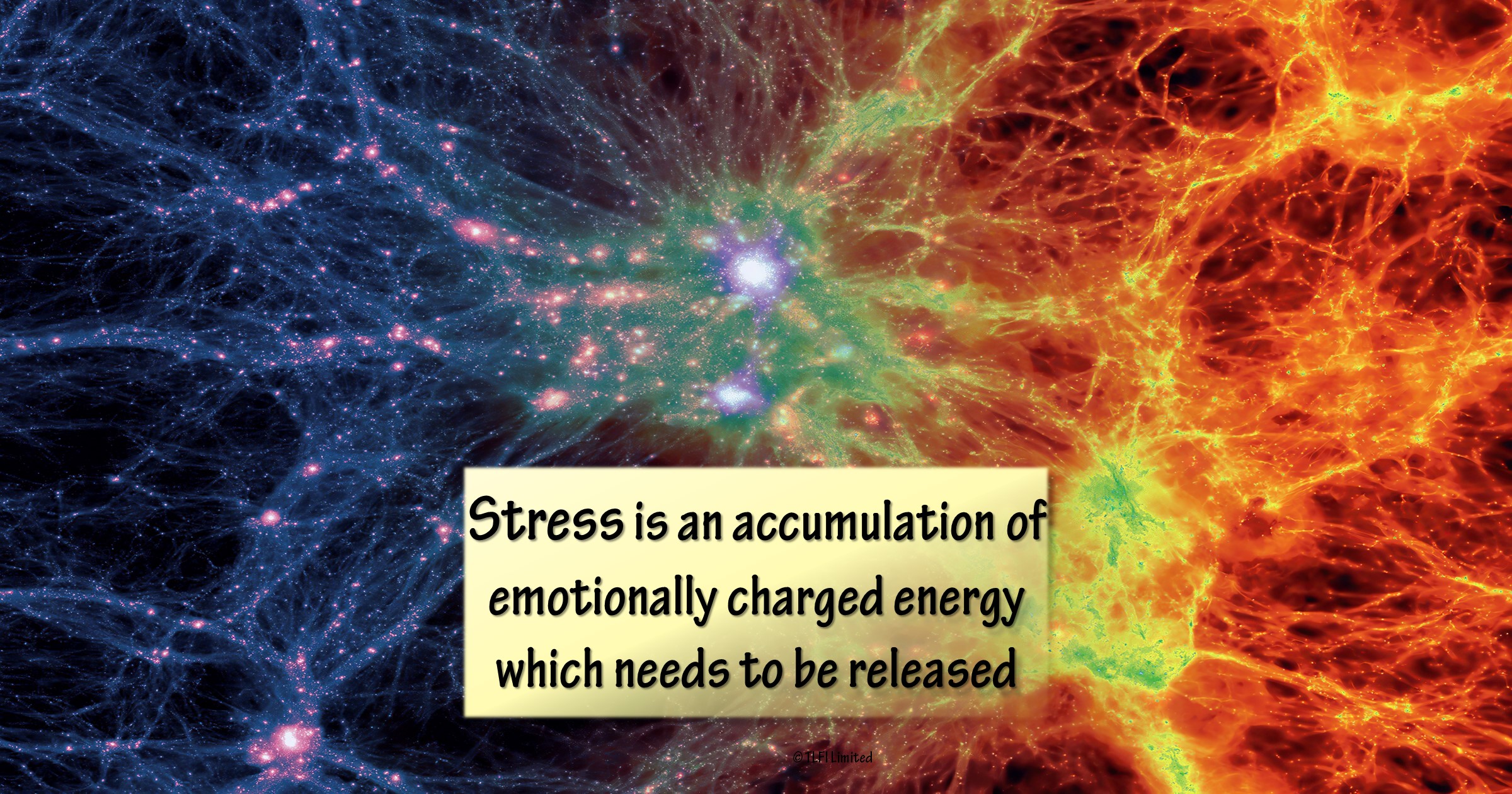
A brand-new approach to understanding stress is that stress is simply an accumulation of energy. As you experience life, your thoughts, actions and responses can result in a buildup of energy within various areas of the mind and body. If this buildup of energy is not suitably removed, the overload of emotionally charged energy will create issues for the human mechanism. This overload of emotionally charged energy will lead to what we recognise as stress.

The energies of your thoughts and emotions, especially when to the negative, can increase and flow through your nervous system. Stress intensifies this energy into the body, which then produces additional emotionally charged energies. If you are under lengthy periods of stress, these energies can increase even more. As these energies accumulate within the human mechanism causing damage like that of an electrical short circuit. It is not unusual to hear nowadays that individuals state they have become “burnt-out” as a result of stressful situations in their lives. It is the overload of these emotionally charged energies which causes damage and resulted in this burnt-out feeling.

While you should also bear in mind the more traditional elements of stress, this different view on the underlying mechanism of stress provides you with a new way to manage and control stress before it becomes a major problem in your life. When you begin to experience stress building up, find a means to release this build-up of these emotional energies for the wellbeing of yourself and others around you.

Some simple methods can be used to help you destress by draining away these emotional energy overloads. One effective method requires you to take several minutes out in meditation or mindfulness to see yourself near a lake or sea. Then while maintaining the image of the lake or sea, try to visualise this overload of emotional energy draining off into the water. Another equally effective technique is to stand on the ground as you perform your meditation, then envision the overload of emotional energies being drawn out of you into the earth. Alternatively, if you are practised in conscious breathing, then attempt to see the overload of emotional energies flowing out from you as dark clouds as you exhale each breath.
Bringing True Focus

The capability to really focus your mind is a pivotal aspect of any kind of meditation, mindfulness and certainly many facets in your life. If we were to evaluate the populace in its entirety, it would be discovered that a very small percentage of individuals have the inherent capacity to really focus and quieten their minds without concentration. While roughly two-thirds of the population will regularly struggle to bring focus to their minds. When your thoughts lack focus, it is akin to light travelling through a prism contrasted to light going through a magnifying glass. While the light transverses both the prism and the magnifying glass, what occurs to the light on the journey is very different. The same holds true of your thoughts, where you can learn how to focus your thoughts, as opposed to letting them become scattered or dispersed. This is becoming considerably more important as our awareness or attention spans are diminishing, along with our capacity to retain relevant information as a result of the arrival of social media and contemporary InfoTech.

What approaches can be utilised to aid in bringing true focus to your minds and thoughts and not on the occasional time that you remember to practice? Most techniques which are embodied in mindfulness and meditation can assist you to focus your thoughts, but you may wonder how can this work.

One of the most effective tools to achieve focus is Ekagrata. Though the techniques of Ekagrata are typically only beneficial for a tiny percentage of individuals who have actually been determined to tame their minds and invested the hours of training.

For a lot of people, making use of sounds such as chimes or gongs can provide an external stimulus which will assist in focusing your mind. People can then focus on the sound, as opposed to the various other thoughts which float around their minds. With this focus, you can then establish calmness within, which can then provide the basis for you to discover more advanced or sophisticated aspects of meditation.

Conscious breathing and techniques similar to Breathe with Purpose; which are free, can offer an alternative effective way to help focus the mind. Such techniques are notably beneficial for applying positive affirmations. These are just a few of the numerous techniques which can be leveraged to help you. The most important aspect is your ongoing efforts to bring focus to your thoughts.

Reconnect with Mindfulness

Increasingly more of us have ceased noticing many aspects of the world within and around us, especially when we live very busy lives. It is something which may not be immediately obvious as we are so entrenched in our lives. With an ever-changing world, it has become significantly easier to lose touch with the sensations of life and living. As we do, some of us start to act totally via conditioned thinking, apparently reacting unconsciously to life.

You do not need to change who you are or modify your beliefs to become a lot more self-aware. All of us have the capacity to be mindful, to take notice of and be aware of the here and now. The trick is discovering that impetus to break free from the thoughts which your mind generates to keep you living life mindlessly. Active intelligence is the act of engaging in your thought processes beyond unconscious thought, utilising both good judgment and awareness to make real choices. In all of this, it is awareness which is the fundamental key to activating choice in life.

Through the awareness of yourself and your life, which can be achieved via techniques such as mindfulness, you can break those patterns of unconscious thoughts or pre-programmed reactions. At its heart and core, the whole focus of mindfulness is about awareness. Whether that be awareness of a sensation in your body or of some other external subject, the objective is the same. The objective is to focus your mind away from the everyday thoughts of your mind.

So if you find that you have actually stopped noticing the worlds around or within you, spend some time reconnecting with your real intentions with life force mindfulness.

Be Aware as you Walk

Walking can be beneficial on many different levels. Walking has been used as a means for becoming calm, helping to quieten the mind and even for spiritual advancement for countless years. People are gradually starting to rediscover the diversion and basic enjoyment of walking. A walk can be included in a break at work or at any time of your choosing. If you are experiencing stress or anxiety, then taking a walk may well enable you to ease some of this mental anguish, frequently giving you an opportunity to bring a different perspective to the situation. While we can all appreciate that going for a walk in the country, or other nature spots may be the most beneficial, realise it is the walking which is the catalyst for your changed thinking. Simply taking a brief walk around the block or around the local park can have a beneficial effect on your day.

The basic act of choosing to go for a walk, allows you to have a change of surroundings. This change alone, may be sufficient for you to be more mindful as you are no longer immersed in the situation. The removal of yourself for a particular situation or location is just as important as the act of the walk itself. This is because you actively remove yourself from the emotional triggers, thoughts or energy which were at your previous location. With the proverbial change of scenery, you have the opportunity to enjoy the experience of the walk itself.

As you walk, attempt to be aware of the sensations within your body, such as the motion of your legs or arms, and be aware of your breathing. Depending on where you have gone for a walk, you may additionally take in more of the environment around you. You may become more conscious of the sounds which constantly float into your ears, the smells which fill your nostrils as you breathe, or even the temperate of the air or the feeling of the sun on your skin. All of these acts of awareness or observation of the world around or within you, can help to change the way you think if you allow it.

Often one of the biggest challenges is that when people go for a walk as a break, they bring their problems with them, rather than doing their best to leave them behind so that they can really benefit from the walk. Take some time out and go for a walk to avail yourself of the opportunity to be more mindful, take a break and refocus. You may well find your thinking will be sharper and your mind clearer after a beneficial break.

What You Think You Become

How many times have you become aware of the expression “You become what you think” or variants on the same concept? Your thoughts are more than simply thoughts, they are what guide you through life and define you. They shape your perspective of the world and those around us. If you believe you can be successful, typically, you will achieve some form of success. However, if you believe you will fail, then more often than not you will face challenges and not succeed. This does not imply that you are prophetic, it just means that you generally believe and act out what rattles around inside your head.

Your mind is a powerful tool when used correctly, but it can also be your own worst enemy. You may not know it, but for most people, your mind can play tricks on you. If you think you cannot do something, at that point you have set yourself up for failure. Before you have even begun you are questioning whether you will be successful, it is a formula for calamity.

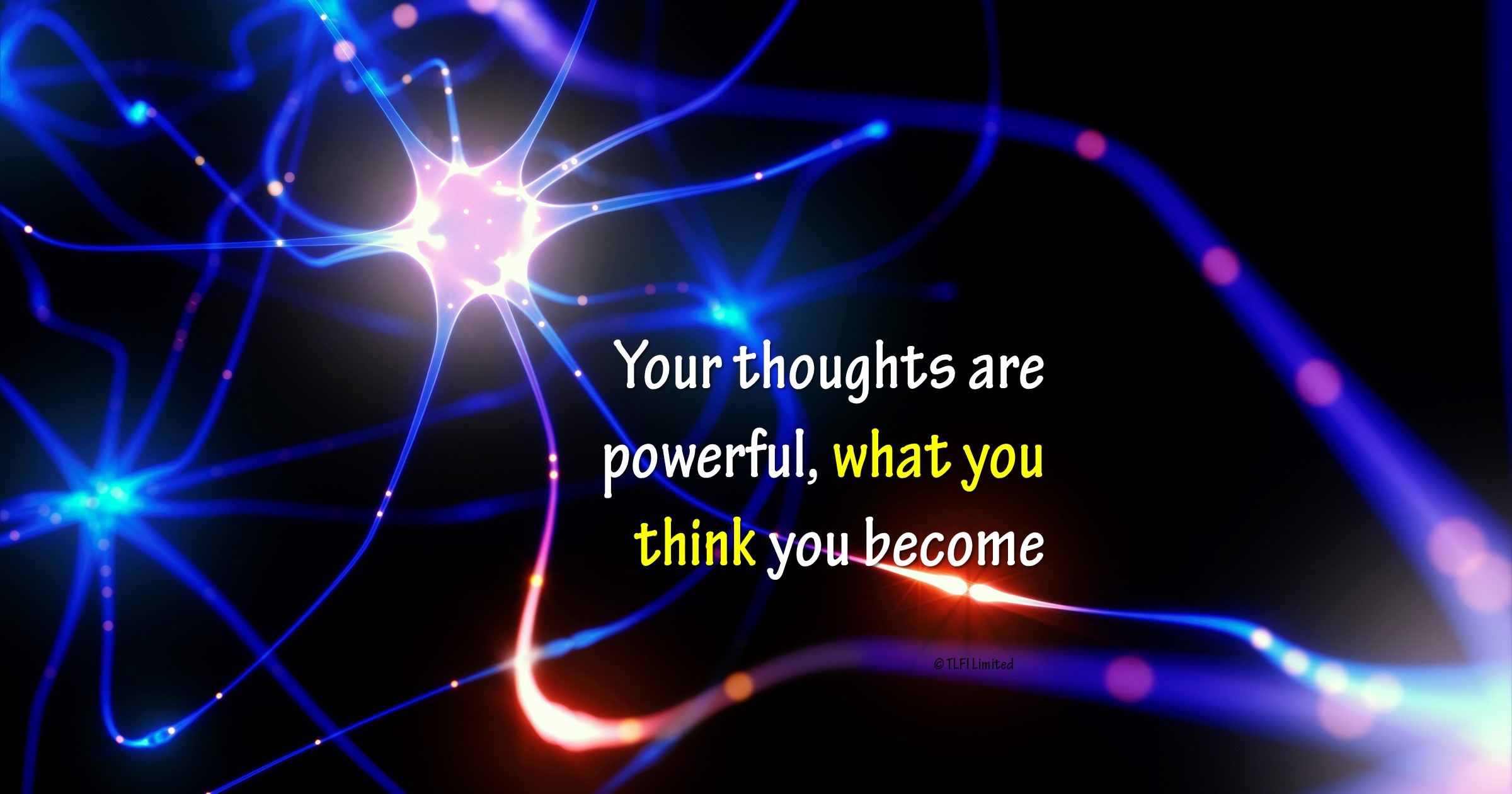
Buddha stated, “The mind is everything. What you think, you become“. As you probably have picked up from the above paragraphs, there is an honest truth in this statement. It then follows that if you can control your mind, you can help to direct and guide the direction of your life. We live what we think about constantly. These thoughts might be intangible, however, their power lies in the way they affect and influence us. For every thought or action, there is a reaction or effect. This correlates to the observations made by Newton when he detailed his third law of motion. Realise that your thoughts and reactions all have effects and consequences. There is always an effect even if you do not witness the result. Your thoughts and reactions in life can result in an accumulation of emotionally charged energies within you. These energies can have damaging or detrimental effects on your body, sometimes bringing about illness.

We have the capacity to choose how we feel and to dictate how we will live our lives. That is why our thoughts are so significant, due to the fact that they determine virtually every element of our lives. You can either be shackled by your thoughts or set free by them. If you want to transform your thought process and improve your quality of life – you must take action. So begin to take control of your thinking and reactions to make sure that you only build beneficial energies of thought.

Attain the Quietness

Nowadays it is very easy to lose the battle with Social Media such as Facebook, Instagram, YouTube, TikTok, Snapchat, LinkedIn, Twitter, Quora, Medium, Pinterest, Tumblr, and various other apps taking hold of your life. Even though you may well have reduced your screen time with digital well-being tools, you might have noticed that your attention span has decreased, or that you become seemingly quickly bored by a topic and feel the need to swipe onto the newest fad. Consider for a moment that it is your mind which is winning the battle, and continues to draw you back to scrolling and swiping through Social Media.

If though, you wish to know yourself, your strengths and weaknesses, your brilliance and dark sides, then you need to discover some quiet time in your life. Discovering some quiet time means more than closing the app or turning off your smartphone, it is about really bringing some renewed focus to your way of thinking. Truly quietening your mind can be extremely beneficial for your well-being and quality of life. Choose a technique such as meditation, mindfulness or the more advanced practices such as cognition that can help you to boost your attention span and at the same time provide you with ways to assist in quietening your mind.

Your Thoughts have Energy

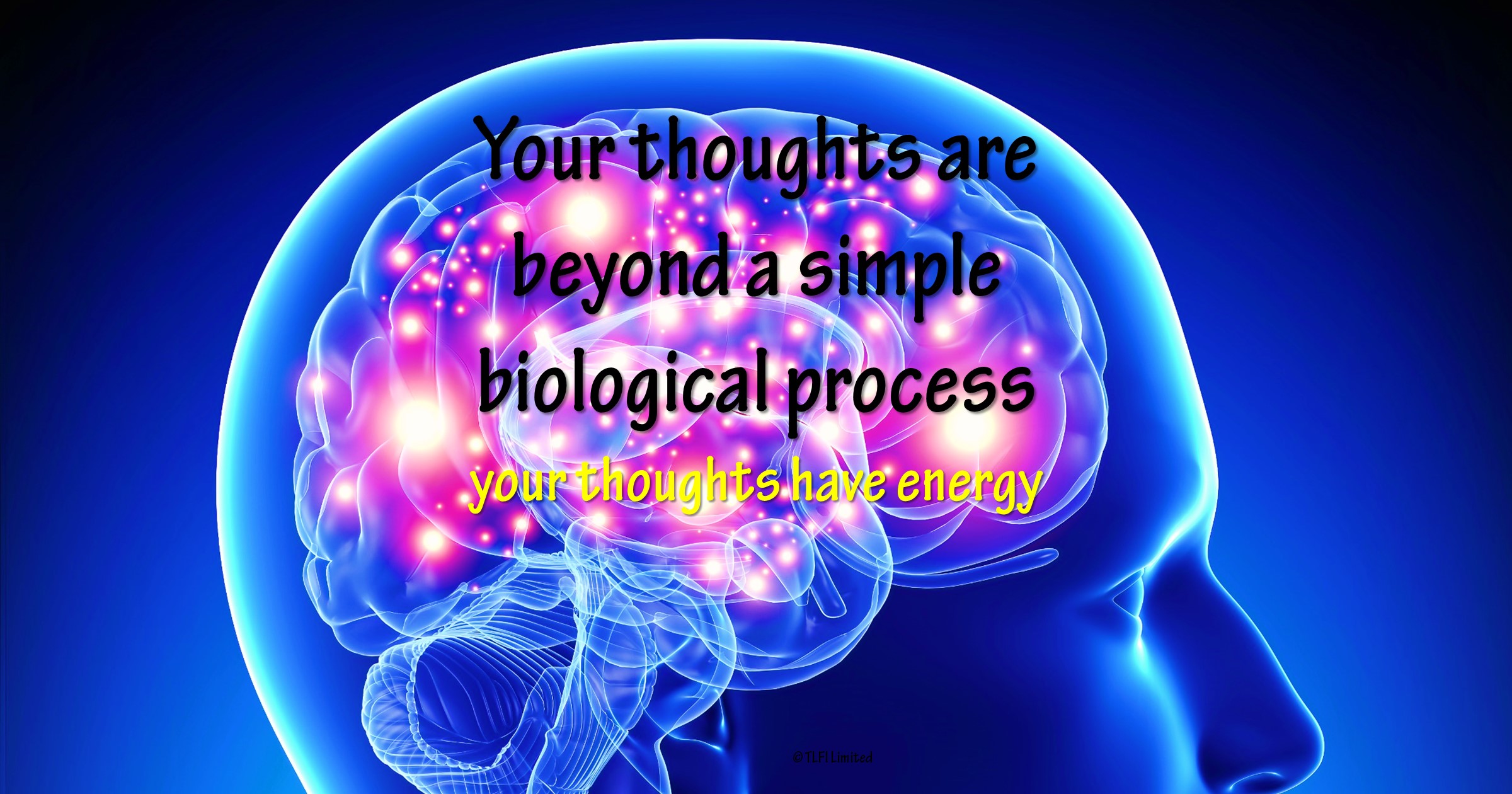
Thought is a rudimentary human function, and something everyone does daily. The human brain is made up of about one hundred billion neurones, which are interconnected by trillions of connections, called synapses. Each of these connections could be relaying anywhere between one and a thousand transmissions per second powering the basic biological engine of thought. That being said, are your thoughts beyond this biological process within your brain?

It is necessary to consider that the human brain is just part of an intricate system which entails the complete mental form. Thoughts arise not only as electrochemical connections of the brain but are present as electromagnetic impulses. Some cognitive researchers have started to perceive that thought is not confined to the brain, but simultaneously occurs in the brain and the body. It is this electromagnetic nature of thought, which enables it to spread through the brain, the body and our surroundings.

As thoughts are generated via an electromagnetic impulse, thoughts are in their very nature, formed of energy. Let us consider for a moment, that thought is created, and by so doing, you have actually placed within the thought your very own energy. On a fundamental level, you can regard the energy of thought as the biochemical energy which is derived from the metabolism of sugars within the neurones and glial cells of the physical brain. You should additionally regard the energy of thought as being the magnetic energies which flow through the mental form to enliven the thoughts generated in your physical brain. You have created thought with the combined energy within the brain and mental mind, and then because every little thing in the known cosmos is constituted from energy, then it stands to reason, thoughts are in themselves energies.