Ekagrata a State Beyond Mindfulness

Ekagrata is a Sanskrit word that translates to “one-pointedness” or “single-mindedness”. It refers to a state of focused attention in which the mind is completely absorbed in a single object or activity, and all other distractions and thoughts are temporarily set aside.

While mindfulness emphasises a non-judgmental awareness of the present moment, Ekagrata takes this further by focusing the mind on a specific activity or object. Some activities such as yoga, qi gong or tai chi can help you to focus your mind through physical activities. Other practices, such as visualisation or creative imagery, can act as a supplement to focus the mind through mental acuity. In all of these activities or applications, the one common element is that it takes practice to apply Ekagrata to bring a real focus to your mind.

In the state of ekagrata, the mind becomes fully absorbed in the present moment; you set aside all other thoughts and distractions to focus with single mindedness. However it is important to be aware that this single-mindedness is not that associated be being stubborn, it is about being focused. Similarly, the one-pointedness is about keeping that focus, but not being so focused that you proverbially burn yourself out.

It should then go without saying that Ekagrata e can lead to improved clarity, and heightened awareness, helping you to grow beyond the fledgling steps of being in the moment with Mindfulness.

Many of the techniques available from The Life Force Institute provide a mixture of methods aimed at helping you achieve the real focus of Ekagrata. Some of the methodologies include the application of directives within the Life Force Mind, specially crafted hand gestures, and well documented activities to aid in your visualisation when undertaking any activity. Different methods will be more effective for different people. We are all different in how our minds operate and what will help to achieve improved focus and clarity.

Ekagrata a State Beyond Mindfulness

Ekagrata is a Sanskrit word that translates to “one-pointedness” or “single-mindedness”. It refers to a state of focused attention in which the mind is completely absorbed in a single object or activity, and all other distractions and thoughts are temporarily set aside.

While mindfulness emphasises a non-judgmental awareness of the present moment, Ekagrata takes this further by focusing the mind on a specific activity or object. Some activities such as yoga, qi gong or tai chi can help you to focus your mind through physical activities. Other practices, such as visualisation or creative imagery, can act as a supplement to focus the mind through mental acuity. In all of these activities or applications, the one common element is that it takes practice to apply Ekagrata to bring a real focus to your mind.

In the state of ekagrata, the mind becomes fully absorbed in the present moment; you set aside all other thoughts and distractions to focus with single mindedness. However it is important to be aware that this single-mindedness is not that associated be being stubborn, it is about being focused. Similarly, the one-pointedness is about keeping that focus, but not being so focused that you proverbially burn yourself out.

It should then go without saying that Ekagrata e can lead to improved clarity, and heightened awareness, helping you to grow beyond the fledgling steps of being in the moment with Mindfulness.

Many of the techniques available from The Life Force Institute provide a mixture of methods aimed at helping you achieve the real focus of Ekagrata. Some of the methodologies include the application of directives within the Life Force Mind, specially crafted hand gestures, and well documented activities to aid in your visualisation when undertaking any activity. Different methods will be more effective for different people. We are all different in how our minds operate and what will help to achieve improved focus and clarity.

Emotional Alchemy Transforming Your Emotions

Some people have discovered great success by utilising a set of techniques known collectively as Emotional Alchemy. This pertains to the process of altering your emotions into different states. The concept can be likened to the alchemists’ objective of transforming ordinary metals into gold. Similarly, you possess the ability to transmute what may initially appear as negative emotions into higher ones, through the practice of awareness and understanding.

Starting the process of emotional alchemy requires embracing emotions without judgment or resistance. By ceasing to engage in a battle against your emotions, and instead becoming an observer with acceptance, you create room for transformation. When you acknowledge and validate your emotions, you honour your authentic self, your Life Force, thereby fostering an environment conducive to personal growth.

For an efficient restoration of emotional equilibrium, it is crucial to engage with your Life Force. Understanding emotions as a form of energy allows you to work with your Life Force for better comprehension and eventual transformation of those energies. By cultivating a harmonious connection with your Life Force, you can heighten emotional awareness and better regulate your reactions. Techniques such as meditation, yoga, qigong, and tai chi are structured to balance and enhance the flow of chi, establishing a solid foundation on which you can begin this transformative process.

Mindfulness as a Stepping Stone

Mindfulness can be an effective tool and serves as a stepping stone towards attaining enhanced self-awareness and inner peace. It promotes conscious awareness of your thoughts, emotions, and physical sensations “in the present moment” while fostering an accepting and non-judgmental attitude towards yourself and others.

However, mindfulness alone is not enough to bring about lasting transformation. To achieve enduring change, it is crucial to cultivate wisdom, compassion, and other affirmative qualities. This necessitates a committed and continuous endeavour to train the mind through practices like meditation, self-reflection, and improved awareness.

Ultimately, the goal is to develop a deep understanding of yourself and the world around you and to cultivate a sense of inner peace and well-being that is not dependent on external circumstances. This is a lifelong journey that requires patience, perseverance, and a willingness to embrace change and growth.

Surpassing the Limits of Your Mind

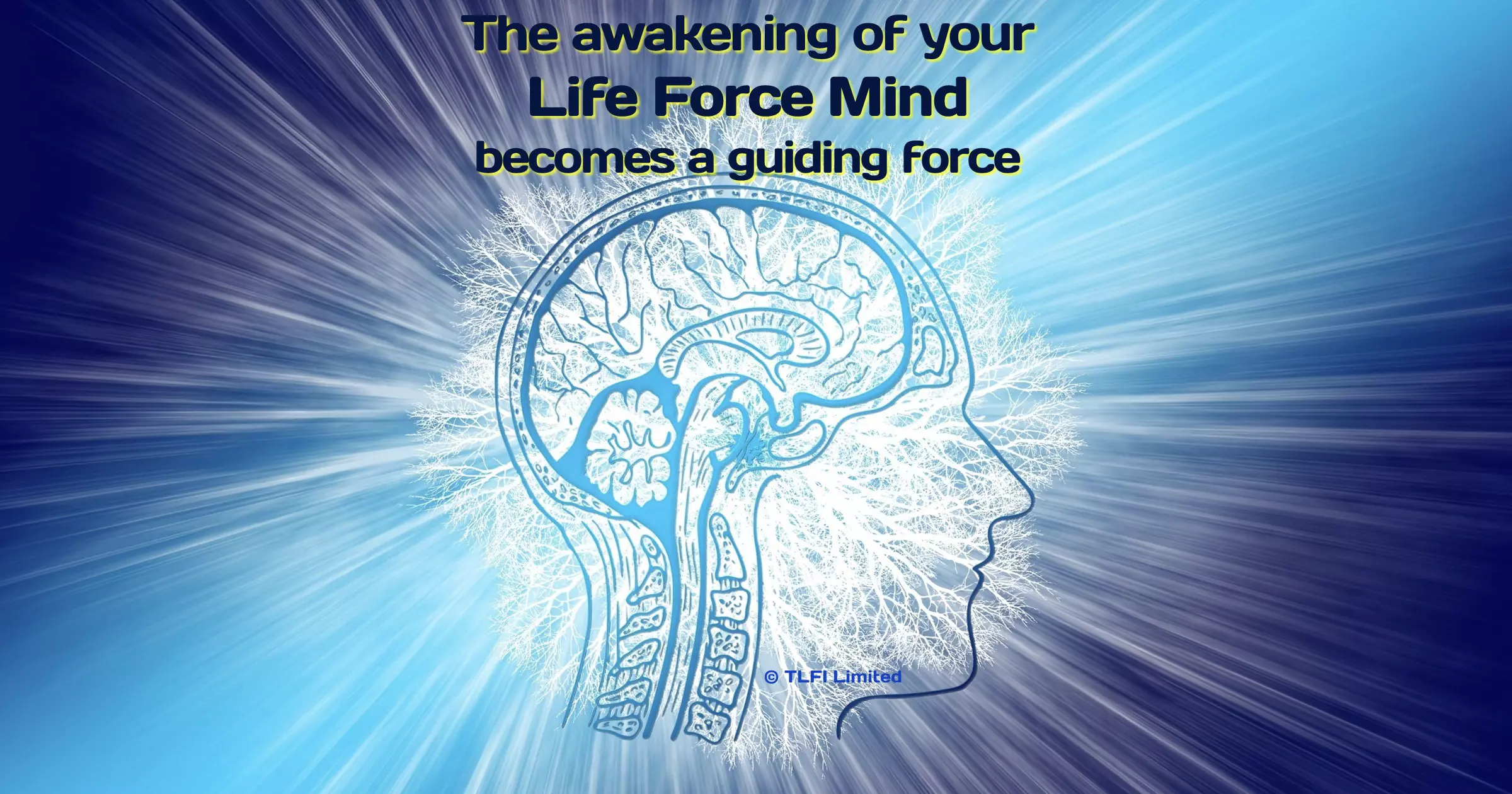
The journey of surpassing the limits of your mind unfolds as you begin to balance and harmonise with the energies of your Life Force, unlocking the transformative power that lies within the depths of your being. At the heart of this journey is the delicate balance and harmonisation with the energies of your Life Force. As you consciously engage with your Life Force, a transformation begins with the gradual awakening of the Life Force Mind. The awakening of your Life Force Mind marks a shift from the dominance of the mental mind and passive intellect, to one where the Life Force Mind begins to assert control.

As the Life Force Mind asserts control, you will gain a heightened ability to navigate the ebb and flow of emotions and to better master your thoughts. However, it is important to realise that this is a transformative process, and is not a rejection of the mental mind. It is an elevation of consciousness that transcends the limitations of mere cognitive processes, giving you a profound sense of inner stability in the face of life’s challenges.

Life Force Meditation enlivens the Life Force with a dedicated purpose of thought. It transcends the boundaries of typical meditation states, mindfulness, and positive thinking, all of which, while valuable, remain tethered to the limitations of the mental mind. Through the application of directives or commanding thoughts placed in the back of the mind, you can gradually awaken these unrealised aspects of your Life Force.

As you engage in Life Force Meditation through the use of Cognition, you will discover a realm where thoughts are not just fleeting patterns, but expressions of a higher, more expansive awareness. The potential is within each of us to awaken to a state where the mental mind becomes a tool, not the master, and the Life Force emerges as the guiding force toward a more profound and harmonious existence.

Sorry can be the Hardest Word

Do not be afraid to be the one to say sorry after an argument or disagreement, even if you think you are in the right. Being sorry is not about taking a proverbial side, winning or losing. It is an exploration into the realm of friendships and relationships which underscores the transformative power of humility, gratitude, and the acceptance that compromise should be seen as a cornerstone of harmonious connections.

In the heat of disagreements, the ego often stands tall, fuelling the belief that admitting fault or offering an apology is a sign of weakness. However, the opposite holds true. Apologising requires a deep well of strength and self-awareness, an acknowledgement that relationships are nuanced, and the pursuit of being right at the expense of connection is a hollow victory. Learning to say sorry becomes a bridge that spans the chasm created by disagreements, fostering understanding, and fortifying the foundation of trust.

The essence of compromise is a hard lesson to grasp, especially in a world that increasingly fosters individuality and the pursuit of personal desires. Yet, as you navigate the complex web of relationships, both personal and professional, hopefully, you may realise that compromise is not a surrender or loss. It is an acknowledgement that more often than not, we need to work together in life to achieve mutual understanding and shared happiness.

Gratitude becomes the natural offspring of the willingness to apologise and compromise. When you embrace the humility required to say sorry, it can help you to better appreciate the friendships and relationships around you. Gratitude allows you to shift the focus from what is lacking or perceived to be lost, to what is present or achieved. In the act of saying sorry, you can not only mend interpersonal bridges, but also cultivate a grateful heart that sees the richness of what already exists.

Realise that simply saying sorry can make such a difference, whether it is to defuse a situation or to make things right. So take the time to contemplate that being sorry is not so difficult to achieve.

Observation can be Your Teacher

The simple statement “If you observe, everything is your teacher” is often overlooked by people as they seek the next big thing in life. However, there is great wisdom in this statement which transcends traditional notions of learning, urging you to recognise that every moment and every circumstance carries within it the potential for profound insights and growth. This concept echoes the wisdom of many spiritual traditions while emphasising the interconnectedness of all things. Teachings are inherently embedded in the fabric of existence.

In adopting this perspective, you become open to the rich tapestry of lessons woven into the very fabric of life. Nature becomes a mentor, whispering lessons about resilience, impermanence, and interconnectedness. Interactions with people, whether harmonious or challenging, become mirrors reflecting various aspects of yourself, providing opportunities for self-awareness and understanding.

Observation is the real key to unlocking the teachings that permeate every facet of existence. It is the cornerstone of learning, and through mindful awareness, you can uncover the teachings that await in every moment. It is also an intentional choice to engage with the world with your open eyes and a receptive mind. When you adopt the mindset that everything is a teacher, the mundane can transform into the extraordinary, becoming a source of learning.

Embracing this idea that everything is a teacher, is a transformative shift in perception. It is an acknowledgement that growth is not confined to formal institutions or specific experiences, but is a continuous, ever-present journey.

Comprehending Planetary Effects

The location of the Moon and planets in a constellation at the time of your birth is part of your astrological programming or key code. The Moon and planets within our Solar System have an established and prescribed energy and influence, which are inscribed with positive as well as negative facets. They are the regulating forces of every little thing which takes place within our material continuance.

 Understanding the small nuances that these celestial objects can influence, is the key to understanding the diverse nature of human astrological key codes. The richness of the variability of energy patterns helps you to better understand why very few individuals will react or think the same way.

The Moon and planets of the Solar System also provide keys to bring about changes in your ways of thinking and reactions. The Moon magnifies your emotions through the strong magnetic energies it exerts upon the Earth. Mercury strongly influences the mind. Its location at your time of birth imprints patterns on how your mind will operate. Venus strongly implants the patterns of emotional reactions within your psyche. Mars for the basis of your attitude to life, your drive and motivation and rules your personality, often being your own mirror. Jupiter has a strong governing aspect in your life, your material progress and your well-being. Saturn regulates the deep-seated or subconscious aspects of your way of thinking and can provide one of the biggest challenges through its amplification of karma. The outer planets and bodies of the Solar System including Uranus and Neptune, are the driving force behind the inner planets; whereas Pluto (although now no longer recognised as a planet by the IAU) is to higher inner evolution.

Discover Astronomical Astrology for a wealth of additional information on True Astrology.